Recent conversations have me realizing the need to try to begin to hammer out a topic that’s been on my mind for a while: the difference between advocacy and reporting.
Understanding the merits, methods, and problems of both disciplines is especially necessary in the information-saturated society of today.
I also talk about the merits of Linux and give some reasons for and against using it from a content creators perspective.
LOL. That thumbnail tho. I couldn’t resist…wut will they say bout us ma! We must attain Linux Purity!
In this ‘TFJ Vlog’ I discuss how the solution to many problems of technology like Big Data may not be technological but legal and societal.
I was heartened when I found out that the CEO of AT&T had mentioned the need for an ‘Internet Bill of Rights.’ I had long had the ‘Big Data/Privacy/Quality of Life’ conundrum milling about in my head. Especially after reading Cukier and Schonberg’s book. It was refreshing to see these issues being addressed from a policy perspective by a business interest.
Now I realize that as was mentioned in the Variety article that’s linked below, there are inconsistencies in AT&T’s behavior and the CEO may have self-interested motives. Nonetheless at least lip service is being given. Though we must of course call for much more.
Which will require us to look into the matter closely as it unfolds and educate ourselves on all its permutations.
Toward’s that effect here are the videos and background reading that I read in preparation for this post.
This is some truly glorious and informative kvetching from the illustrious Bryan Lunduke, on the subject of cell-phones, which is an issue directly related to the topic of this vlog.
Really couldn’t settle on a relevant picture. Holme’s was an analyst extraordinaire.. and there’s some sort of thing on the public channels about Queen Victoria. So good enough.
Apologies for issues with the formatting, I ran out of time, and hope to be able to fix the eyesore within the coming week.
The term integrative analysis is generally used in an ‘applied science’ context. ‘Big Data Companies’ such as IGI Global define it as:
1. Analysis of heterogeneous types of data from inter-platform technologies.
Inter-platform technologies mean that the machines and instruments used to gather data are combined into a cross-platform system for integrative analysis of diverse data-sets; which often results in an emergent framework.
That’s still a bit clunky. A better take may read something like: using data from different measurements and processes and combining it to find new patterns that lead to new hypotheses, and discoveries, in so doing paving the way for yet more hypothesis and discoveries.
So in essence just plain old science. But there is a distinction. In that, this is plain-old science at an incredible pace. Augmented in the case of IGI and similar ventures by computing and highlighting the need for the synthesis of such technology assisted derivations in iterating novel solutions.
I am taking pains to describe the more prevalent (industrial, professional, sic) use of integrative analysis to avoid confusion about its operational definition as regards this journal.
At the core of this sophisticated-sounding term is a simple concept. In essence integrative analysis is about not missing the forest for the trees. And actually, it goes a step further than that in not missing the trees for the forest.
That’s what I love about ‘Integrative Analysis’ – It is a top-down, bottom-up, object-oriented sort of thing. Not tarrying too long within the restrictive parameters of any one iterative methodology.
Why apply such a term to a somewhat artsy, ‘philosophical’ website like The Fractal Journal?
In short: spillover. What I mean by this is that the incredibly successful scientific practice of reductionism has bled into other disciplines, like journalism, the arts, and philosophy.
I am by no means ‘anti-reductionist.’ I view ‘reductionism’ as an indispensable weapon in the arsenal that will help humanity win the war for understanding. It yields results because it’s intuitive, focused, searchlight helps us break down processes and problems into workable parts.
Reductionism has always gone hand in hand with bottom-up methodologies. In which the parts, once understood as distinct, are reassembled into an integrated whole. So why proclaim any level of novelty or lavish special attention to ‘integrative analysis.’
Well, simply because two things go hand in hand, doesn’t mean that their relationship is always balanced. I don’t know if it has to do with the psychology of folks given to the hard sciences, or is simply due to the intrinsics of the hard sciences, or some combination of these factors but the balance has certainly seemed to be in favor of reduction (At times even ‘reductio ad absurdum’).
Really, I think that this has something to do with the greater need for specialization as the complexity and depth of respective fields emerges.
Or, more specifically: The focus of respective disciplines despite sharing a common core of basic scientific principles has titrated down to rather over-isolated little monads. This being the result of over-reliance on reductionism, perhaps by necessity.
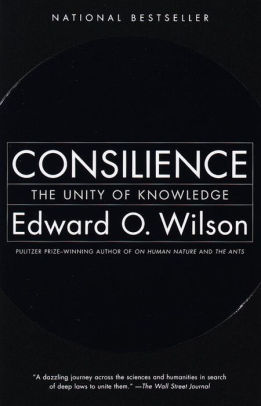
There have been folks more qualified than I who’ve commented on such trends, like the biologist E.O. Wilson, who calls for the need for a return to more classic conceptions, with a focus on synthesis over isolation. (That is my takeaway from his book Consilience and should not be read as a definitive statement of Wilson’s position.)
This trend of over-reliance on reductionism has led to the unnecessary and destructive Balkanization of disciplines. While there is a need for distinction, there is no need for rigid walls. In fact, such walls render the world of science and the humanities more sterile than they need be.
Synthesis, integration, of data and ‘models’ derived from reductionist processes, is what The Fractal Journal is about. The emergent frameworks like the ‘fractal analogy’ of its namesake are why I think it valid to use ‘integrative analysis’ as a subheading.
Despite the journal’s broad range of topics, and its use of artsy and informal means of framing information and exploring subjects, it does engage in ‘integrative analysis.’
Though it isn’t a highly specific computer-assisted search for ‘proof of concept’ it does nonetheless venture into serious, structured analysis of parts and systems. Since it does so with an especial focus on highlighting the overlap of parts and systems it can fairly be called integrative.
I’ve often found this need for integration elegantly highlighted. Just today while doing background reading for the first chapter of my water book, I jumped from covalent bonds to valence, to heuristics, and finally to the Inventor’s Paradox. All these things were interconnected via Wikipedia because they are interconnected conceptually. This is the first proof of the integrated nature of reality that I witnessed just a few hours ago.
The second proof is the ‘Inventor’s Paradox’ itself. The inventor’s paradox lies in the domain of problem-solving. It addresses the very heart of the problem with over-reliance on reductionism; by pointing out the somewhat counter-intuitive fact that sometimes broadening your search, helps you find a specific solution.
The paradox was introduced by George Polya in his book How to Solve It:
– The more ambitious plan may have more chances of success […] provided it is not based on a mere pretension but on some vision of the things beyond those immediately present.
When you are attempting to solve a problem in the reductionist style, which really is the natural, and intuitive style, you use Occam’s Razor to remove as much ‘excessive variability’ as possible.
I know that some people consider it gauche to quote Wikipedia directly, but I really found the way reduction’s problem was painted there rather elegant:
“Doing this can create unforseen and intrinsically awkward parameters.”
I really like that phrase ‘intrinsically awkward parameters’ because it’s a really apt way of portraying the limitations of reductionist methodologies. Too narrow a focus, too specific an explanation, leaves you more vulnerable to stagnation via the illusion of having arrived at either an answer or an impasse. It is the ultimate missing of the forest for the trees.
It always reminds me of a wonderful evening I had about half a decade or so ago. My ladyfriend, my best friend, and I were all hanging about a house she’d been allowed the use of. Lounging about, washing away the taste of cheap cigarettes with cheaper wine we were a perfect portrait of decadent Bohemians. She fancied herself a visual artist, or at least that was what she’d intended her university to teach her, till it convinced her to lean towards marketing. So, she had many a drawing supply at hand.
My buddy and I who were more musically and mathematically inclined decided on a whim to abandon our bantering about on a couple of guitars to join her in drawing. This is where the psychological and methodological differences relevant to this essay came into play.
I am a sketcher. I draw broad and messy things and eventually whittle them down to finer details. My buddy who’d I’d never seen draw before was a solid line, boom, there’s the thing, no bs, sort of fellow. I think he’d drawn a parrot or a penguin or some such thing with very clearly and neatly defined lines and structures. It was like an ‘engineer’s blueprint’ of a caricature of a penguin. I think this unsurprising given his facility with programming and mathematics.
I believe that on this night we had a nautical theme going. Perhaps owing to the presence of Rum somewhere on the premises. Hence the parrot or penguin or what have you.This ambiance led my storyteller’s mind to form all sorts of imagery from bits and pieces of literature I’d read over the years. I’d drawn something akin to a villa on the coast, luxuriating, on a clifftop above a bay lined with ships. Aesthetically it was somewhat lacking but intelligible enough. It did not have the neatness and the crips pleasant feel of my friend’s parrot. But it did have something else: context.
Context to me is the aim of integrative analysis. Rather than a very clear, and pretty, solitary parrot, of an engineer; a contextualized version would have that parrot atop the shoulder of a rum-swigging pirate, standing in the crows nest, amidst a placid sea. Something that an architect may be more likely to produce.
Really, this could be taken even farther.
Terrence McKenna said in one of his many lectures that people tend to be either seers or readers. I think this has some validity demonstrated through the story above.
I consider myself to be a reader. Seeing things and extrapolating a meaning, a context, which I then display. A seer sees a monad, a thing in isolation, but in exquisite detail, its background might be hazy, but the thing in itself is there, complete, coherent, etc.
I think it important to merge these two inclinations as much as possible. I think this important because the world is not bottom up, or top down, or even object-oriented. It’s up and down, and bottom up, and goes every which way.
….but in every which way within reason. It is the search for that reason that humanity has embarked upon and which The Fractal Journal is glad to support and celebrate.
Really shoulda been called the art of consistent uploads but eh… Here is the TL;DW (too long; didn’t watch) version of this vlog:
The main message is that consistent posting helps you develop your artistic vision, relevant skill-sets, and confidence. Consistent posting can, however, be difficult due to psychological hurdles. I whittle these down to five variations on the themes of romantic notions and perfectionism.
Here they are:
5 Barriers to Consistent Posting
1) ‘High Volume Leads to Low Quality’ – This is a form of perfectionism. The thought goes ‘If I post for the sake of discipline, for the sake of posting, then those posts aren’t going to be good, quality over quantity.’ Well, I think the case can be made that the biggest barrier to quality is lack of quantity (lack of practice). The feedback and stamina you receive from putting your best possible foot forward is exactly the sort of journey that will take you on the road to higher quality creations. Wallowing in notions of making something good, better than ‘those wankers polluting the internet’ isn’t going to get you very far.
2) ‘Effort Fallacy’ I don’t know if this is an official logical fallacy but I see it so often. What I mean by this is that when things feel too easy they don’t feel worthwhile or authentic. It’s really easy to post, to start a blog, therefore at times people feel cheap and illegitimate. They long for validation. Being published by Random House, or being on a music label are perhaps the only things that will make them feel like they’re contributing something of value (Don’t get me started on college…).
This is because the person with this sort of psychological state is hungry for litmus tests. It’s not necessarily a bad thing since going through the process of gaining the approval of professionals is a valuable obstacle course. However, it is still a fallacy because that obstacle course does not necessarily ensure quality.
Quality can be assured by objective tests such as economy of language, readability, descriptive depth, or clever implementation of the circle of fifths. You can do that on your own. It’s especially important to do that on your own because eventually you will have to, and you will gain the approval of professionals faster, if you gain real-world exposure by putting yourself through the paces, of putting your stuff out there.
3) ‘There are a zillion voices and artists, I won’t get heard.’ Well, sure over-saturation is a thing. The good news is that it has always been a thing and many people have still been able to overcome it. The problem is certainly compounded today because technology has allowed yet more voices to enter the arena at an ever-increasing rate. Yet, from everything that I’ve observed, if you put something out there and it’s good, there will be people who find it, enjoy it, critique it, etc. Sometimes even if it’s not so good. I find that I am able to discover new content creators frequently and keep up with at least twenty or so on a weekly basis.
4) ‘Privacy and Security’ This is perhaps the most valid concern on this list. People don’t feel comfortable becoming a ‘public figure.’ Fortunately, there are pen names. It’s important to not let FUD hold back your creative development. Something that you can only gain through practice and feedback.
5) ‘I haven’t the time.’ In this world of washing machines, automobiles, and 4g even a parent working full time will eventually find the odd hour (I think it’s much more than the odd hour, given the fact that people find time for the Super Bowl etc.) Whatever your window is, use it. Building your creative skill-sets will benefit your life in a host of ways.
Hope this has been helpful, thanks for watching, listening, or reading.
Seems I’m channeling my inner Weegy in that trv kvlt frame on the top right there…
I’m having technical difficulties and so to blend parts I had to use Kdenlive instead of Ardour. I guess everything has a silver lining since I can show off a couple of neat little features of this free, open-source, video editor. I used the vignette effect in the overlay violin video along with ‘binarize dynamically’ to give it that James Bond, 60’s gun barrel feel.
Though the video proper may make me liable for causing seizures, it’s comprised of two of my favorite effects: luminance, and old film.
Kdenlive also has audio editing tools but I only used the volume control to make the violin part (sic) quieter than the guitar and voice. I’d have done more and actually synced up the parts but things run a bit odd on this older HP. Though likely I just have to resolve some software dependencies.
So if you’re ever in a jam like me, with all your DAWs and even audacity refusing to work, maybe you can turn to Kdenlive. But, that’s really a super tertiary reason. The primary reason is that it is fantastic for editing videos. And it costs nothing.
‘Such, I believe, is the source of the Ionian Enchantment: Preferring a search for objective reality over revelations is another way of satisfying religious hunger. It is an endeavor almost as old as civilization and intertwined with traditional religion, but it follows a very different course – a stoic’s creed, an acquired taste, a guidebook to adventure plotted across rough terrain.’
– E.O. Wilson, Consilience – The Unity of Knowledge – Chapter One: The Ionian Enchantment
Consilience is about consilience, how consilient. That’s the trouble with the word. It’s a bit of a tautology. One of those classifications that point to such a broad phenomenon that it has almost no meaning. It’s like ‘emergent properties.’ Almost everything has or is an emergent property.
I do think these are useful and indispensable concepts. So why do I begin a review by casting aspersions at them?
Well, what’s a review without a bit of taunting and teasing? A touch of play, that’s how you actually keep those austere leather-bound volumes open, rather than having the staid darlings nobly accrue dust on some high shelf.
It is of vast importance to not respect something so much that you never touch it.
For E.O. Wilson the history of humanity, the history of its philosophical, and scientific pursuits has a common thread. Consilience comes from Latin and means something akin to a jumping together. So it is that all knowledge all ken seems to jump together according to a certain logic. It is at such points of convergence that we can become confident in the reality of a given phenomenon and proceed to form a conceptual framework on the basis of this evidence. A conceptual framework which can then be used as a compass to navigate the world of knowledge and make valid predictions. This order this logic is a sort of ‘Ariadne’s thread.’ Allowing us to trace a path through the mysterious labyrinth called cosmos.
Logic itself is a testament to an inherent order that though far more chaotic than the straightforward of ‘fire hot don’t touch,’ is non-the-less intelligible to creatures accustomed to such essential syllogisms.
It is that quest for inherent order for unifying principle that defines the ‘consilience’ concept and serves as the focus of this book.
If one reads the leaflet of the Knopf hardcover edition he discovers a highlighting of this theme:
‘our explosive rise in intellectual mastery’ … ‘has its roots in the ancient Greek concept of an intrinsic orderliness’ …. ‘ a vision that found its apogee in the Age of Enlightenment’
Greece is the focus of the first chapter, in which E.O. Wilson recounts his youthful fascination with the natural beauty of his Alabama home. A fascination that would develop into a sense of mission, the poetically dubbed ‘Ionian Enchantment.’
‘The enchantment’ is a reference to the philosophical outlook of Thales of Miletus, the idea that the universe is intelligible and can be understood once the proper principles are isolated.
One of the great strengths of this book is that Wilson does not let his aesthetic sensibilities cloud his analysis. He readily assents to the difficulty of bottom up analysis, of the synthesis which is at the heart of consilience. Accurately portraying it as a task far more challenging than the more familiar reductionist strategies that have seen much success in the physical sciences.
In Ariadne’s Thread (another Greek allusion) Wilson points out that it is ‘easy’ to go from conceptual complexity to basic physical units. It is an altogether different thing to go from basic physical properties to conceptual complexity.
The myth of Theseus unravelling the ball of Ariadne’s thread in the minotaur’s maze, serves as an apt analogy for humanity’s attempt to make sense of its surroundings. We always find retracing our steps to be easier than finding valid routes through a labyrinth that ultimately has no center.
All we know is that there is something that allows us to navigate, something dear and precious, the yarn of a beautiful maiden that I’m going to take the liberty of identifying with ‘wisdom’ (sic) for the sake of conceptual convenience. This wisdom, this sense of the maze being navigable, is what will eventually allow us something like mastery of that puzzling terrain. Though as Wilson cautions, mastery of such a thing, may not be possible to fully realize.
I’d argue that such an impossibility is actually bliss. It means that the universe is intelligible to just the right degree. So that we may never know enough and grow weary and bored. That greatest joy of exploration will never be yanked from our species.
In fact the more we discover the more the avenues of mystery expand. The future as Wilson points out in the last chapter of his book belongs to synthesizers. People with a sense for consilience who can incorporate information into valid novel coherencies. The universe is thus a vast garden that intelligent creatures like ourselves can eternally cultivate.
This is what makes this book such a worthy read. The rekindling of the classical fire. That flame which was ‘lost’ in recent decades due to the intense specialization that became somewhat inevitable as knowledge and complexity increased.
It is a timely response to the relativism and ‘post modernism’ (sic) of the present age. Which far from providing the fecundity that they seemingly promise have served up something much more akin to stagnation.
I found this book to be a worthy read as a review of the history of science and philosophy through a biologist’s lens. You will encounter in-depth coverage of such perennial issues as nature vs. nurture, the role of genetics in culture, the physical functioning of the brain as it relates to the nature of consciousness, and much more.
The early chapters accounting of the development of the sciences and their underlying methodology has a historian’s flair, that is a timely remedy for the atomization of the knowledge of a ‘common core’ mind.
I’d urge anyone wishing to enrich both their passion and their knowledge to pick up this excellent book.
O dear, it’s happened again, someone asked me if I Facebook…
There is a now ancient video of Michael Crichton sitting in with a panel of sci-fi writers discussing the state of that industry. During that discussion he brings up how the increasing presence of cameras has the potential to change the way that people interact. He says that being in front of a camera certainly makes him act differently than he does in a more private setting.
This behavioral shift is the problem with sites like Facebook.
Ok, but behavior changes from generation to generation and is often brought about by technology. So why is this particular behavioral shift a bad thing? Aren’t these Luddite concerns?
The sort of behavioral shift that seems to be the trouble is group-think, confirmation bias, and insecurity. Though the three things are distinct phenomenon they share a common thread and are thus treated as the ‘behavioral shift’ in question.
This phenomenon is supported by four ‘emergent properties’ common to all social networks, electronic, and otherwise.
1) The Constant Peanut Gallery
2) Increased Misunderstanding
3) False Security
4) Increased Preening
All of these properties emerge from the need for validation.
Validation is the core of many goods and many ills. It is important to check your perceptions, ideas, and at times your very person against the ideas, opinions, and persons of others. It helps to form a balanced opinion and is arguably the animating principle behind parliamentary government and peer review.
Yet, peer review and parliament often act as agents of confirmation bias rather than guardians of truth. Galileo’s works were reviewed by the experts of his day and found lacking. Does this mean that we should do away with parliament and peer review?
By no means. It was corroboration of his findings that eventually led to their acceptance in the scientific canon. Bad peer review can be reviewed by good peer review. So long as the process is ongoing issues will be resolved.
This brings us to the core of the problem with Facebook: Stagnation.
The constant peanut gallery often leads one to adopt the biologically expedient role of ‘crowd pleasing’ whether consciously or unconsciously. Increased misunderstandings arise because folks choose to share views dampened by crowd pleasing. A false security arises from the perceived confirmation of one’s views and person leading to increased preening or display of those characteristics.
All of these are the recipe for group-think, confirmation bias, and insecurity that form the stagnation which makes Facebook an unsavory medium. The sort of things that I believe to be at the core of Crichton’s concerns while on that panel.
I use Word Press, YouTube, Mastodon, and Minds. These are all social networks in their own right. Am I then being unfair to Facebook? Isn’t vlogging and blogging and posting subject to the same problems as Facebook. Why don’t I get a Facebook account?
Well, for one Facebook has a rather checkered history. It is also different from the sites I choose because it involves ones immediate circle. Due to its reaching so close to home its effectiveness for debate and unbiased analysis of ideas and persons becomes compromised.
It is much easier to focus on ideas and arguments with sites like Word Press and YouTube. All the problems with Facebook do of course occur there but it is with less frequency and degree that they do. This is as I have said due to the close and personal nature of Facebook.
Which not only compromises privacy but brings us all the dark sides of a global village with alarming speed. I am rather cosmopolitan in my outlook so I am not at all promoting provincialism in criticizing ‘the global village.’
It is in fact provincialization that we have to fear from ‘the global village.’ The provincialism of ideas. Human beings despite their variety of cultures and philosophies do share a certain common psychological profile. Due to this common thread all of their variety becomes endangered rather quickly when filtered through one global ‘common room.’
This is why the majority of the world is now California. I’m serious. Look at all the dudes, and jeans, beards, and t-shirts. It’s been going on for quiet a while. This narrowing of style and ideation. Where a girl in Frankfurt is nearly indistinguishable from one in Orange County.
Yes, all right but, Facebook isn’t meant to be a place for the exchange of ideas. It’s meant to be a way to connect with friends!
Ok, well I do have a phone and a car, and an email, and a post office. Why does the whole world need to know of my circle of friends? Why does my circle of friends need to be privy to my every interaction with my circle of friends?
Is shooting messages and inviting/excluding people from events publicly really ‘connecting?’
I rather think it has the opposite effect. To where I can hardly enjoy a beer with friends, without one of them shoving a little screen in my face. Bearing the latest meme or Facebook faux pas, glowing with hi-def brightness that the table behind me can read.
Oh, dear it’s already six well…I suppose I’ll just post this introduction to a book review I plan to get on with some time this week.
Before I go into the actual review I’d like to frame it with a few observations.
1998 that is the year of publication. That was the cusp of the new millennium. Little wonder that Wilson saw it fitting or was inspired to write a book like Consiliecne. A book that calls for the sort of cooperation and integrative analysis upon which a fast-pasted, complex, and deeply interconnected future must depend.
I am sixty years younger than the professor. Yet even I witnessed the sort of fundamental technological and societal transition that must have been spectacularly apparent to an attentive person as the 20th century unfolded.
Wilson was born in 1929 and I in 1989. He had firsthand experience of the development of modern airlines, of the civil rights movement, and the rise of computing from primitive room consuming vacuum tube driven monstrosities to the button sized micro-processors of today. I mention this because I have long been eager to relate my fascination and concern with people thrown headlong into the internet age without any real exposure to legacy technology.
I spent my youngest years in Russia. From 1989 to 1998 I was Moscow born and bred. I do not know if my contemporaries state side had as much exposure to older gadgetry as I. But I remember having to use a rotatory phone without irony or affectation. That was my idea of a phone. I also recall women pickling as matter of course rather than as a precious yuppie hobby. Washboards were standard. I don’t think I ever saw a washing machine till after I landed in Atlanta. I remember water based heating systems, archaic toilets, and most of all I remember the sense of having to learn to write well and legibly.
It is the latter point that I wish to stress the most. There is something sacred about writing by hand. About the febrile nature of paper. The care and attention that both author and postman have to give to a letter to deliver through a cold vastness to its intended recipient is a thing of magic. I love typing, I am very much a techie but there is a lot lost in that efficiency.
The geometric patterns of cursive script coupled with the more robust and refined physicality of guiding pen over paper is a transcendant experience. It is one I hold in special esteem because it is the first real form of the development of the formalization of thought, dream, and drive being preserved and thus rendered transmissible. The manner of conceptualizing and abstracting that led to the creation of the modern world owes its existence to writing. This is why I feel it necessary to promote its rawest and most ancient techniques as ones whose preeminence should not be allowed to dwindle.
One of the main themes that seems to run through Consilience is the stifling nature of over-specialization. I feel this to be a valid sentiment. So valid that it’s a fact. I think that over-specialization, professional, and social nearsightedness is due in part to an atrophying of humanistic arts like handwriting. Craftsmanship and artistry seriously executed as discipline provide a fertile ground from which good science and sound philosophy can spring.
This is a sentiment that I think E.O. Wilson would agree with for reasons that should become apparent as I outline and review this timely and worthy work.
A computer, a technology, should never be a tether. It should be a tool to enhance knowledge, productivity, and pleasure.
To use a tool properly, one must learn to get by, to get about one’s business without it.
That’s why, post-shower, I am making this hand-written entry with my PC turned off.
There is only the pen, the paper, the ticking of the clock, and the sound of a radio coming from the other room.
Here I am, at my task, the task of writing, with more pleasure, ease, and sentience.
There is no song, no YouTube video, no endless podcast, there are no headphones at all. I do not drown passively among other people’s voices. I select what’s relevant from memory.
I do not fear that my thoughts will be lost, that they will suffer in quality because they are a scrawl in afternoon light rather than coordinates on a glowing screen.
I feel no unease at the knowledge that digitally augmented ken, all the world’s libraries, and forums, are one further step away.
I am in fact as free and secure as the crow that just flew overhead.
Because I have made it possible, more likely to see him.
I have but to swivel in my squeaky office chair to boot the machine. Should I fancy to share my insights electronically.
Perhaps soon I will. But not before I visit a long neglected couch to read a hand-held book.
Such is the exercise I choose to assure a firmer grip upon my faculties.
Through this I find my freedom, my mobility expanded, and my electric bill a touch more modest.






 The Fractal Journal