

Such was the beginning of a most metal friendship.
The Dorkening….

That night was ten years ago give or take a year. Wut…now that’s heavy…

Such was the beginning of a most metal friendship.
The Dorkening….
That night was ten years ago give or take a year. Wut…now that’s heavy…

When I was a kid I recall going out to my friends Dacha with my drunken uncles. Potato cooking seemed so simple then. First you get properly pissed then you wrap the spuds in tinfoil and toss them in a fire by the river.

Gone are those halcyon days of gilded simplicity… as is my memory of how to cook a potato… so I did a search for it.
Apparently they explode…

Glorious Glory in a Glorious Land of Glory Which is Glorious – Not The Politburo

That my decadent western friends is the 1337 hacker’s version of a summer cottage. I remember launching my first DOS attack from the turnip patch. Off to do some squats….
I nicked that photo from here: http://holesinmysoles.blogspot.com/2011/03/travel-photo-thursday-mar-31st-dacha.html
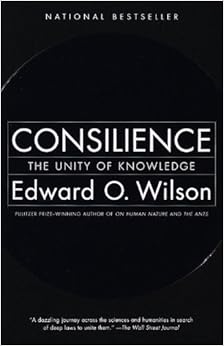
Oh, dear it’s already six well…I suppose I’ll just post this introduction to a book review I plan to get on with some time this week.
Before I go into the actual review I’d like to frame it with a few observations.
1998 that is the year of publication. That was the cusp of the new millennium. Little wonder that Wilson saw it fitting or was inspired to write a book like Consiliecne. A book that calls for the sort of cooperation and integrative analysis upon which a fast-pasted, complex, and deeply interconnected future must depend.
I am sixty years younger than the professor. Yet even I witnessed the sort of fundamental technological and societal transition that must have been spectacularly apparent to an attentive person as the 20th century unfolded.
Wilson was born in 1929 and I in 1989. He had firsthand experience of the development of modern airlines, of the civil rights movement, and the rise of computing from primitive room consuming vacuum tube driven monstrosities to the button sized micro-processors of today. I mention this because I have long been eager to relate my fascination and concern with people thrown headlong into the internet age without any real exposure to legacy technology.
I spent my youngest years in Russia. From 1989 to 1998 I was Moscow born and bred. I do not know if my contemporaries state side had as much exposure to older gadgetry as I. But I remember having to use a rotatory phone without irony or affectation. That was my idea of a phone. I also recall women pickling as matter of course rather than as a precious yuppie hobby. Washboards were standard. I don’t think I ever saw a washing machine till after I landed in Atlanta. I remember water based heating systems, archaic toilets, and most of all I remember the sense of having to learn to write well and legibly.
It is the latter point that I wish to stress the most. There is something sacred about writing by hand. About the febrile nature of paper. The care and attention that both author and postman have to give to a letter to deliver through a cold vastness to its intended recipient is a thing of magic. I love typing, I am very much a techie but there is a lot lost in that efficiency.
The geometric patterns of cursive script coupled with the more robust and refined physicality of guiding pen over paper is a transcendant experience. It is one I hold in special esteem because it is the first real form of the development of the formalization of thought, dream, and drive being preserved and thus rendered transmissible. The manner of conceptualizing and abstracting that led to the creation of the modern world owes its existence to writing. This is why I feel it necessary to promote its rawest and most ancient techniques as ones whose preeminence should not be allowed to dwindle.
One of the main themes that seems to run through Consilience is the stifling nature of over-specialization. I feel this to be a valid sentiment. So valid that it’s a fact. I think that over-specialization, professional, and social nearsightedness is due in part to an atrophying of humanistic arts like handwriting. Craftsmanship and artistry seriously executed as discipline provide a fertile ground from which good science and sound philosophy can spring.
This is a sentiment that I think E.O. Wilson would agree with for reasons that should become apparent as I outline and review this timely and worthy work.
The review will be posted by next Friday.

Today was a research heavy/geeky linux tinkery sorta day. Plus this guy was overdue for a walk. So in case I don’t assemble a post before bedtime I’m going to cynically use my friend’s cuteness to distract you from the lack of content.
Prepare to cringe….
In 3…2….1….
Pook!
Pookster Kennedy
Dog Jones Industrial
Buddy Brown
Pookah
Pooki
KOOH!
Douhg
Shady Slipper
Barrel
Chubbins
Licks McGee
Mr. Holmby
Professor Farts
Poochly
Brownie
Brun
Bastard
Samoabitch
John Pawtson

Part One: Post.Grunge.Punks. (Webcomic) – Tim Pool is a Nut
Part Two: Post.Grunge.Punks. (Webcomic) – Tim Pool is a Nut (pt.2) – The Timatree
The Tim Pool Beanie origin saga is now complete. Be sure to check out the links in the first two posts to get a feel for the humor here. That is if you feel so inclined. There’s more substantive content afoot so long as all goes well this week. Thanks for stopping by. Cheers.

It turns you
Into city visions
Your eyes become
Kaleidoscopes
Of other peoples
Dreams
Daze-ed is the walk of those
Among the walls that talk
They cannot separate
The lead out from the chorus
Thus feeding on frustrate
That ether
They are static things
Electric buzzing
In the maelstrom
Of soft white lies
And forgotten histories
What use have we for arcane
Magic
Or for symmetry
Such things are daft and tragic
Leave us be
There is no need of learning
Save to secure
The turning of a gear
That will assure
Tomorrow
They don’t know why
And do not sorrow
That tomorrow
Is today
Transmission
The transmission
It’s a mission to deliver
Deaf, Blind, and Dumb
Transmission, Transmission
This banquet is just a crumb

The popular conception is a hard thing to qualify. It is difficult to define a common view because there are so many common views. Yet it can be done. At least insofar as setting the stage for social, psychological, historical, and philosophical analysis.
There do seem to be pervasive opinions that though rarely vocalized may as well be set in stone.
For instance, everyone always expects artists and musicians to be young. At least no older than thirty. This is strange.
It might be because most bands that society is currently familiar with made their mark in their twenties.
There may be some biological reasons for youths blessing of artistic endeavors.
Neurology and the endocrine system come to mind. Then there are the social and psychological variables.
First there is the naivete that’s fertile ground for creative exploration, then there is abundant energy to till that ground, and finally, there is a drive to define and prove oneself. Society also fosters and encourages young creators* whereas there is a greater onus on the mature to be ‘responsible’ and ‘settled in.’
All these factors seem to wane as people age into their thirties. So is it meant to be? Should everyone north of thirty settle into the proverbial accountant’s office and repair their gutters on the weekends?
No.
First, there are many examples of artists who didn’t ‘make it’ until ‘later’ in life. Andreas Bocelli and Leonard Cohen to name a couple.
Second, there are many examples of artists who continued creating masterpieces throughout their lives. Bach springs to mind. As do Johannes Brahms, Richard Wagner, and Stevie Wonder.
Third, if one decides to view life as having many stages, then each stage of life has its own music its own landscapes to offer.
To begin the analysis of creative stages of life let’s examine the art of the young.
The case can be made that the young are too histrionic to produce anything of lasting value. As evidence, one can cite the similarity of subject matter and delivery of bands in the last century.
First, there is the sex, drugs, and joyously cacophonous ROCK starting somewhere around the time of ‘The Doors’ and lasting well through the eighties hair-metal scene. Libidinous excess and boundary flaunting tests of one’s limits through psychedelics and alcohol aren’t the only tritely recurring sins of the young.
There is also the angst and neurotic introspection of Grunge, Alternative, and Progressive genres that cropped up in the late eighties and still hold sway into the era of whistling ironic ukulele hipsterdom. Are maudlin sentiment and bitter emotion really the best subjects to set to music? The young musicians of the last three decades seem to think so.
Given its subject matter and focus, the art of the young has unsurprisingly taken a morbid turn. The 27 Club is ‘a notional roll of remembrance’ that pays homage to the fact that many of the 20th centuries musical luminaries died young. Numbers can be mystic things and the fact that Jim Morrisson, Jimi Hendrix, Kurt Cobain, and Amy Winehouse all died at 27 lends an air of tragic magic to that arbitrary figure. Hence the ‘colloquialization’ of ‘27 Club.’
Death has a certain finality that often lends weight and perceived substance to the art of those who passed. ‘The good die young.’
The audience ‘knew’ these folks as an explosion, as a passionate flame that burned too bright and quick, and suddenly there is the mystery of eternal silence. What more would they have made would they have said? What secret pain, what uniquely anguished insight not accessible to average joe, did these brilliant people harbor? What was it that made people who wrote such tuneful and evocative things so self-destructive?
It would be wrong to characterize these artists as immature. It is a silly business indeed to hover over history like a daft-shrink-bog-wraith psychoanalyzing the minutiae of the lives of its actors. Yet there does seem to be an air of self-fulfilling prophecy to the art of the young.
The deification of such art, the raising of it to some sort of deep expression of the human condition, while at times valid, can also be foolish and dangerous. It is the former because foolish and dangerous things are indeed a part of the human condition. It is the latter because despite the melodic and lyrical finesse of such works they were tainted by hormones and substance abuse. A tainting that leads to a sort of ‘Opera Buffa‘ where those who gained much admiration and success, freshly minted aristocrats in a sense, weren’t sated by such things and chose to become a tragedy for a convoluted sense of authenticity or psychic chaos magnified by chemicals and overcharged emotions.
The creative stages seem to fit pretty neatly into the categories of the prodigy, the rockstar, the craftsman, and the master.
The space of this essay will only allow the exploration of two out of four of the stages of creative life. So in light of all the information considered which would be best to unpack?
Since the ‘rockstar’ has been addressed it seems fitting to move next in line to ‘the craftsman.’
As the world approaches the cusp of a new decade, is it not fitting to promote a new sort of ‘27 Club’? Why not popularly consider 27 to mark the beginning of careers rather than looking with perverse expectation towards the demise of heroically dysfunctional musicians?
Twenty-seven may, in fact, be the perfect time to start a band. One still has abundant energy which can be used in conjunction with greater mastery over one’s emotions to select which insights and life experiences to magnify through art. Further, it is a time when hormonal needs and spastic bursts of energy will be less of a barrier to serious practice. Your bandmates are more likely to show up on time.
Why disparage the rockstar and highlight the craftsman?
The prodigy, the rockstar, and the master need no encouragement. They will do what they do as a matter of compulsion. The craftsman is the most suspicious of compulsion. As a person moving further into adulthood and feeling the weight of experience, the craftsman becomes wary and guarded, sensing a profounder need to be ‘serious and secure.’
Sometimes this need to be ‘serious and secure,’ to be a steady sort, manifests itself as studied avoidance of creative endeavors. Partly because one is keenly determined to avoid wasting time which has greater weight than ever before. Partly because one wants to avoid seeming gauche.
The truth is that music and art are never a waste of time. They sharpen all the skills and faculties necessary to succeed in work and relationships. Communication and synthesis are two skills most readily and deeply refined through creative endeavor. Atop this boon, there is another in that the magnification of life through art makes you very appreciative of even the most mundane and prosaic aspects of living.
There is nothing gauche about loving life or succeeding in relationships and the workplace.
These stages are of course guides rather than rules. Some may find themselves at a place of overlapping stages. Whatever stage you’re at…what are you waiting for?
Go forth and create.
Related Links and Reading
https://www.digitalmusicnews.com/2015/08/03/18-musicians-who-made-it-later-in-life/
I really like the recording quality I got with the little Focusrite kit that I bought. I also opted for using Ardour (an open source DAW) instead of ProTools. Just cause FREEDOM!
(Disclaimer: I’m not being paid by anybody. I just really love the ability to record fairly decent sounding takes without breaking the bank too much and hope sharing this will help others do the same. Go out and compare and contrast things, maybe you’ll find something better. But the most important thing is to just keep creating and having fun.)
Ray Manzarek gets fun:
I know it’s sort of cringy (to mention) but I find it great when people you admire and whose work you use as a benchmark have similar thought process and feelings to you.
Lyrics
Wasted days and
Golden rays of
Sunshine
When will I rise
and tow…
The drowning line
Long blonde hair
Wicker chair
and
Summer Wine
Such malaise
The milieu
It won’t be fine
A clumsy song about aging.

Tim’s where I get (some of) my news and he seems to be an all around decent guy. I thought this would be a fun way to introduce him to people who may not have heard of his work. Check him out here: https://www.youtube.com/user/Timcasts

