I kind of liked it even though I’m ok with people hating it. I know that my voice might give people major douchechills. Felt a weird impulse to share nontheless. Thanks for stopping by.
A montage might be cool but consistency is the Rule.
Consistency is the glue that holds life together. Cause like glue consistency is consistent. It is the stickiness that lets you keep all the little parts of your mind and soul intact.
What I mean is that following a discipline in any one area is absolutely vital. I think this is why people are drawn to things like Church or meditation. But your view of consistent discipline shouldn’t be limited to stuff like church, work, and meditation.
Everybody today knows how to read and write, how to find out new things, and how to tinker. We really don’t celebrate this enough. So how do we begin celebrating? Do we throw a big party?
Nah. We celebrate by taking these realizations and living them out.
I noticed the other day a thing that made me happy. It was a very small thing but produced a sort of glowing comfortable energy that has carried me smoothly through work this morning.
I noticed that I didn’t have to triple check that I had reset the alarm. A thing I have often had to do because my mind has been a bit of stew from time to time. I was very confident in the recent memory of having seen my phone display: the alarm is set for eight hours and thirty-five minutes from now.
If you’re unimpressed by this minor accomplishment I wouldn’t blame you. But I don’t think that things have to be impressive, to be wonderful and worthwhile. If you’re somebody that juggles a lot of ideas, experiments, and projects then you know how easy it is to get lost in a vast ocean of thought. Even the most even-tempered and unimaginative (I’m not using that as an insult. It takes all kinds.) of folks will experience confidence problems and little slips of the mind.
The reason that finally being able to set an alarm without spastically checking that I’d done it properly was so thrilling, wasn’t the action itself you see. It was the realization of the impact of a virtuous cycle of actions. A virtuous cycle known as consistency. Having isolated the source of my new found confidence to be consistency I felt doubly overjoyed.
Since high school and perhaps even earlier, I’d had the thought that a proper sort of person gets a bit of reading done nightly. A chapter, or a section, at the very least, was, in my opinion, a daily requirement no matter your vocation or schedule. As I grew older and the internet shot wildly away from the simple thing it had been in the early aughts I slowly forgot about my firm resolution.
Fortunately, it had only faded and not disappeared. The impulse was slowly burning ember-like in the recesses of my subconscious. I wouldn’t say that I ever became intellectually lazy but I certainly felt a bit of mental sluggishness that I didn’t think native to my character. This led me to take on more reading and other little learning ventures.
My suspicions were quickly confirmed. Deep attentive reading really helped me to form more coherent concepts, more quickly, and to enjoy life more. I realize that this is anecdotal but I’m almost certain that there are some studies out there to back up the benefits of reading. Since I am being anecdotal I will also say that my dreams became richer and more varied.
I really think that the reason that this works is it gives you more nodes for new information to connect with. Novels, essays, anything really so long as you’re actively reading exposes you to novel frameworks of thinking, to new facts, and perhaps even sensations. I’ve seen a study somewhere that pointed to a link between vocabulary and intelligence. I think the node theory fits in well with that observation. The more ways that you can express or comprehend a thought (vocabulary) the more nodes for building new and nuanced understandings you will have. Since reading is arguably the best way to improve your vocabulary I think you can see what I’m getting at.
About the same time last year (February/March 2017) I decided to reread Michael Crichton’s Sphere and take notes and outline every section nightly. This would force me to not only read but to read in a focused manner and to reproduce the ideas and scenarios that I had encountered. As I did this I noticed that my comebacks were snappier, my ideation richer, and my social interactions were smoother.
It didn’t take long for me to get in front of my makeshift standing desk and type out the first few paragraphs of the Sketch of Sam Monroe. Everything came very quickly, intuitively, and naturally. It wasn’t something spectacular but I now had clay to work with.
This was all of course set against another form of consistency. That of going to the gym and eating more protein (within reason). I believe that my creative spark and mental clarity would still have been vastly improved by reading alone. However, I think that proper sleep, diet, and exercise were indispensable to giving my ideas and energies the requisite robustness.
From that point to the present I’ve experienced an uphill sort of march with steady gains in stability of function. Due to the fact that I focused on reading and engaging in other activities with a consistent focus.
Montage vs. Entsangung
Many of our ideas are shaped by films. And that’s absolutely fine because films can be very wonderful things indeed. However, they are primarily meme machines. One meme that they seem to have produced at least as far as my own worldview once functioned was the overstatement of the ‘montage.’ Or really a particular type of montage where the hero (say Rocky Balboa) goes on a marathon session that takes them to the next level.
That’s fine cause one really can through a few weeks of stern discipline gain a marked increase in skill or strength. But this conception has a problem. Its problem is that it’s a sprint. It lacks consistency. And it makes you prone to thinking that you can always do ‘the whole thing later’ so you don’t bother doing ‘a bit of the thing’ every single day.
‘Doing a bit of the thing every single day’ is what this essay is about. It is also the key idea in my opinion behind Goethe’s Entsangung which you can find here. I think it may be what Linus Torvalds meant in his recent email regarding a kernel update: boring is good. That is that the day to day or the tortoise of incremental progress wins over the sprinting hare. This is because it is what allows the hare to sprint.
This very essay was written at a hare’s pace. It’s been perhaps half an hour now. I’ve just gotten off work a few hours ago and was planning to take care of some chores and meet with friends. This whole thing was really going to just be another ‘starter paragraph’ instead I’ve pretty much completed it and shall in the course of a few paragraphs. The purpose of this sort of awkward mid-essay update is to support the effectiveness of consistency.
I’ve been writing and doing focused reading nearly every day. This has made it much easier to write and do focused reading nearly every day. I’d lament the fact that I don’t write and read every day but I think that would begin to become one of those marathon things. We are creatures who digest and a proper balance that allows time for digestion is healthiest and produces the best results.
If reading and writing are not your cup of tea that’s perfectly alright. I have several brilliant friends of a more mathematical bent who would tell you the exact same thing (consistency wise) but regarding programming and mechanical projects.
Whatever it is that you aim to do well: Do it with consistency. Not only because consistency will help you do it well but because it will allow you to actually experience life more fully. When we are not consistent in at least one or two challenging arenas then our capacity for experience suffers. We do not see the rich interconnections of life as readily because our wits are dulled by inaction. Just like if you do not use your muscles they will atrophy and you will have less fun because moving has become a chore.
Consistency is what allowed me to have the idea for this essay when I celebrated the life-enhancing victory of beating my neurosis regarding alarms. That victory itself is a product of consistency.
So get consistent and get healthy, and if you are, stay that way.
I punched in the code on the keypad in the hall. The kitchen door swung open and we waited nearly a minute for the smoke to clear. There was still some irritant.
Our intruder was a big fellow but something in the shock of burgundy hair bespoke youth. He was doubled over the sink. His hands clattering blindly over unwashed dishes searching for the faucet handle.
“Looks like he’s found his way to the world’s shittiest eyewash station.” I chuckled between coughs.
We’d gone retro. Hell, this wasn’t even strictly legal and we should be wearing masks. It was my decision, I really hated trespassers, but I somewhat softened when that red, swollen face, turned round to try and look at me.
“It burns! It burns deep.” He said with a disturbing hoarseness.
“Jesus, Alan, Jesus, why did you pick CS, that kind… hell where did you get it?”
We’d run back out into the hall. It was horrid. I’d let zeal get the best of me.
“Hey, it was an option, I don’t ask questions, I wasn’t expecting to use this shit on civilians.”
“How do you know he’s a civ? And shit that doesn’t even make sense. Domestic enforcement only Alan.”
“He can’t be any more than twenty maybe twenty-one. His clothes reek of the hills. There’s a loophole somewhere…” I hoped. More awkward meetings with Thorton…
“Well, fuck, we don’t have masks, how are we gonna solve this shit.”
“There’s some saline in storage, we’ll grab that, but really the best thing is fresh air. It’s been about four minutes now with that door open…. Let’s take him outside. I doubt he’s gonna put up a fight.”
“He’s a big fucker.”
“Don’t be a pussy, Lucas. He’s a kid with a lungful of bees.”
The guy was retching now.
“Oh no no..buddy…this kitchen is messy enough…” I said putting a hand on his back and positioning my hips in case I had to slam the fucker.
He didn’t seem to put up any resistance. “Ok, kid, you’re gonna have to step out this door and get some fresh air.” I couldn’t help but cough myself. “My buddy here will wet a rag and then we’re gonna give you some saline and water for flushing.”
“My skin burns, everything burns….”
“Lucas go grab some of Graham’s clothes and that saline. Double time.”
He was gone.
The stranger just kept groaning and retching in the chill Kentucky air. The contrast was odd. Such serenity sat awkwardly against the loud and painful events of just moments ago.
I couldn’t help but wonder how in the hell he’d gone here. The nearest ‘road’ was fifty or so miles from here and the lake didn’t touch any property that was known to anyone save Uncle Sam, people tied up by NDA’s, and maybe a couple of venturesome hicks.
He was too young though.
I was impressed with Lucas efficiency. He was back with all the necessary things within the span of six minutes.
“Ok, I’m gonna need you to take off your top layers of clothing, and put on these.”
“I can’t see…I can’t breathe…”
“Strip.”
A jacket, a flannel, and a beanie were tossed aside.
“Now here’s a jug of water. Flush your eyes with it.” I said making sure his hand found the handle.
“Not all at once. Try to keep your eyes open…”
He was pouring it too quickly but I didn’t blame him.
“Slow down a bit…ok good…”
He got the idea and applied the water to his eyes in measured doses.
“Ok, now take some of this saline and spray it in your nose,” I said handing him a pressurized can of the stuff.
“Ok, now dry off with that towel. I’m going to take you to our shower, you need to run that water hot, it’s not going to be pleasant, but right now you’re soaked and it’s below freezing, so…get inside…double time…”
Our intruder was somewhat recovered.
As we stepped back into the kitchen I saw his red half shut eyes give something like a look of recognition.
“Doc Pierce….?” He inquired with hoarse incredulity.
Just a fun little motivational video with some basic filling cooking ideas that won’t break the bank. Aimed at helping those who need to invest a good part of a limited budget on business or artsy fartsy needs. Though pretty much anybody could benefit.
I still recall sweetly
How the light caught the water
And how very neatly
The sun kissed her daughter
In the fading limelight
To mark a brief passing
Amid dreams, time, and our dancing bones
Skeletal frame
Made quick by live dust
Yet we don’t erect stones
We no longer trust
In kisses
Or passion
Such fleeces
Are quiet out of fashion
Ah but why
What for
What for
That’s the mystery most high
What
What for
The coffin’s not even nigh
No
It is here
We’re in it my dear
Before our time
Because the magic slipped out
We’d found a strong rhythm a stolid old rhyme
We kept to the beat
Cause that’s what strength is about
Yet we no longer greet
The morning with a great expectation
In our rehearsed caress
There is no elation
I no longer see home
When your foot slips from under your dress
What for
What for
I have seen a vast garland
Stretching from aeons
In shadow in light
…gazing upon your delicate hand…
It gave my spirit fight
A sense of place in time’s sand
Yet now all I hear
Is yes, o yes dear
Each repetition is a hammer that cries ‘pon the nail
What for
What for
I’d try to see if there’s more for you or for me
But I’ve got a luncheon with Mr. O’ clock around Four
It was cold, and there was that pine dampness to contend with. I was glad that our guests were too stunned for words. I didn’t like talking while I worked.
Having carried the logs from the basement to the hearth I proceeded to light them.
“Don’t you boys have central heating?”
“It ain’t enough on a night like this,” Sam answered for me knowing my disdain for conversation during activity.
Luckadoo’s lodge was large. We sat in one of the most impressive rooms. The ceiling stretched twenty feet overhead. Five feet above the Buck’s head above the fireplace. There were the obligatory fox hunt paintings and animal skins about. Bespeaking the English pretensions of the moneyed classes of the region. Though, come to think of it Luckadoo actually was a Limey.
With the aid of a bit of kerosene, a roaring flame brought a humanizing cheer to the somber masculine poshness of the room. Our guests were sat in great mahogany leather chairs, while we occupied an assortment of beanbags and lazyboy’s that we’d brought to keep the antique, haunted vibe of the place from overwhelming us.
I reached under my seat and produced a flask.
“Jesus,” Officer Fabre chuckled. “A flask for every occasion? How many of them things do you got?”
“You’d better be glad he has those. You should see him au natural. Patience was never a virtue for Alan Baird.”
I always felt that people overstated the ‘problem’ with my temper. I simply had no use for the excesses and liberties most people thought normal. Generally, I’d let them know nicely, the first time.
“Oh, come on now, I’m a regular sweetheart,” I protested. “In fact, how about I get everyone a round.”
“A round of what?” The Doctor inquired.
“A round you’ll like,” I said rising to my feet and making my way towards the kitchen.
“Alan never disappoints in spiritual matters.” I heard Lucas say with a chuckle as I rounded the corner.
Almost immediately the voices of guests and companions alike were muted. Replaced by an eerie sort of silence broken only by the muffled cry of a nearby owl. The place was a nightmare from a security standpoint.
A coked up sorority with air horns for shoes wouldn’t be any less stealthy than a SEAL team. The stolid nature of the log and stone made the transmission of sound a near impossibility. It was preternaturally quiet. Like being in a well-appointed sensory deprivation chamber.
It got unnerving from time to time. Which is why I was glad for our motion sensors. But the two boffins we’d taken on board had forced me to minimize its use or risk another round of false alarms. I really wished that they weren’t high all the time. But I suppose that was part of the project.
Yeah, I’d bet we’d have caught our French friend if I hadn’t dispensed with arming the thing. Though I’m glad we hadn’t. This present situation was far less awkward than having to phone Langley. I might still have to make the report.
Despite the size of the kitchen it was as cluttered as the comically tiny one in the apartment I’d grown up in. None of us had the time or inclination to do much dish-washing. I really didn’t mind mess except that mess made it hard to know if something had been tampered with.
As I turned on the light and saw a few woodland roaches scatter over greasy pans I couldn’t help but feel that something was off.
I shrugged away the sensation as I stepped behind my minibar. I wasn’t an expert mixologist. I really didn’t care for overzealous bartending. A mint leaf here, a dash of vodka there, a good ice ratio… Really all the magic you need, provided that you were serving up the good stuff.
After pausing for a moment I headed to the fridge. A couple of beers or so would probably be welcome.
As I carried the tray out the door I could have sworn I heard footsteps. I paused to listen. It was probably my imagination.
As I headed towards the parlor I heard the unmistakable sound of falling silverware. I continued on my way as if I hadn’t noticed.
My friends were chatting merrily amongst themselves as I set the tray on a round oak table beneath a Tiffany lamp.
“Ach!” I said in as loud a voice as naturalness would allow, “Ach! I forgot the chasers!”
“Oh, don’t worry about it, that looks fine enough.” The doctor offered.
I shook my head and tapped Lucas thrice on the shoulder. He rose and produced something from behind a bookshelf.
Our guests picked up the funky vibe.
“Act natural,” I mouthed.
“Yeah, I always forget the damned chasers,” I said loudly as the conversation around me recommenced. “Hey, Lucas come help me carry the damned things. That’s the trouble I tell ya…”
As we approached the kitchen I switched to a no less enthusiastic but somewhat more subdued volume. “Yeah, how did you like that plum stuff from Serbia?”
“Was alright,” Lucas said just as we reached the door.
“Here try a shot of this before I put it back,” I announced. Pausing to listen.
I didn’t have to listen very long, for the sound of someone trying to open the kitchen door that led outside. A kitchen door with no keyhole controlled from a keypad in the hall.
Lucas handed me a small dark green cylinder. I removed the pin, and ever so lightly rolled it in the direction of the kitchen’s sole egress.
We moved away. As far away as we could. But not so far that we couldn’t hear coughing and swearing.
In this ‘TFJ Vlog’ I discuss how the solution to many problems of technology like Big Data may not be technological but legal and societal.
I was heartened when I found out that the CEO of AT&T had mentioned the need for an ‘Internet Bill of Rights.’ I had long had the ‘Big Data/Privacy/Quality of Life’ conundrum milling about in my head. Especially after reading Cukier and Schonberg’s book. It was refreshing to see these issues being addressed from a policy perspective by a business interest.
Now I realize that as was mentioned in the Variety article that’s linked below, there are inconsistencies in AT&T’s behavior and the CEO may have self-interested motives. Nonetheless at least lip service is being given. Though we must of course call for much more.
Which will require us to look into the matter closely as it unfolds and educate ourselves on all its permutations.
Toward’s that effect here are the videos and background reading that I read in preparation for this post.
This is some truly glorious and informative kvetching from the illustrious Bryan Lunduke, on the subject of cell-phones, which is an issue directly related to the topic of this vlog.
I decided to make up a story on the go during my drive back home from work. I think it came out ‘ok’ with its chief strength being atmospherics. There did seem to be a bit of unconscious plagiarism in the borrowing of elements from Lovecraft’s: Music of Erich Zann, and Poe’s: A Tale of the Ragged Mountains.
The title was a post-production decision since I felt the strange and nebulous description of one of the characters could best be subscribed by ‘elf or troll’. Trollish dreamer doesn’t have quite the same ring though.
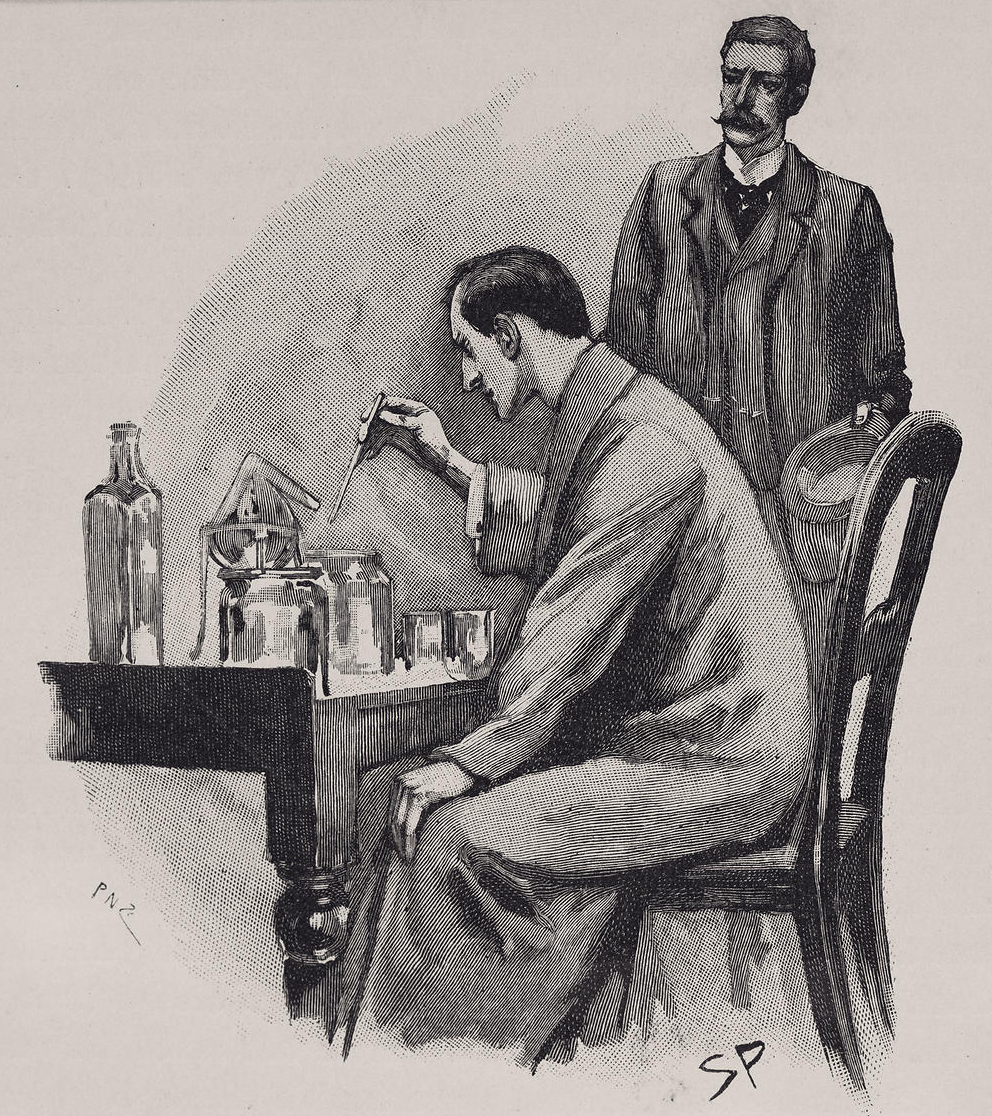
Really couldn’t settle on a relevant picture. Holme’s was an analyst extraordinaire.. and there’s some sort of thing on the public channels about Queen Victoria. So good enough.
Apologies for issues with the formatting, I ran out of time, and hope to be able to fix the eyesore within the coming week.
The term integrative analysis is generally used in an ‘applied science’ context. ‘Big Data Companies’ such as IGI Global define it as:
1. Analysis of heterogeneous types of data from inter-platform technologies.
Inter-platform technologies mean that the machines and instruments used to gather data are combined into a cross-platform system for integrative analysis of diverse data-sets; which often results in an emergent framework.
That’s still a bit clunky. A better take may read something like: using data from different measurements and processes and combining it to find new patterns that lead to new hypotheses, and discoveries, in so doing paving the way for yet more hypothesis and discoveries.
So in essence just plain old science. But there is a distinction. In that, this is plain-old science at an incredible pace. Augmented in the case of IGI and similar ventures by computing and highlighting the need for the synthesis of such technology assisted derivations in iterating novel solutions.
I am taking pains to describe the more prevalent (industrial, professional, sic) use of integrative analysis to avoid confusion about its operational definition as regards this journal.
At the core of this sophisticated-sounding term is a simple concept. In essence integrative analysis is about not missing the forest for the trees. And actually, it goes a step further than that in not missing the trees for the forest.
That’s what I love about ‘Integrative Analysis’ – It is a top-down, bottom-up, object-oriented sort of thing. Not tarrying too long within the restrictive parameters of any one iterative methodology.
Why apply such a term to a somewhat artsy, ‘philosophical’ website like The Fractal Journal?
In short: spillover. What I mean by this is that the incredibly successful scientific practice of reductionism has bled into other disciplines, like journalism, the arts, and philosophy.
I am by no means ‘anti-reductionist.’ I view ‘reductionism’ as an indispensable weapon in the arsenal that will help humanity win the war for understanding. It yields results because it’s intuitive, focused, searchlight helps us break down processes and problems into workable parts.
Reductionism has always gone hand in hand with bottom-up methodologies. In which the parts, once understood as distinct, are reassembled into an integrated whole. So why proclaim any level of novelty or lavish special attention to ‘integrative analysis.’
Well, simply because two things go hand in hand, doesn’t mean that their relationship is always balanced. I don’t know if it has to do with the psychology of folks given to the hard sciences, or is simply due to the intrinsics of the hard sciences, or some combination of these factors but the balance has certainly seemed to be in favor of reduction (At times even ‘reductio ad absurdum’).
Really, I think that this has something to do with the greater need for specialization as the complexity and depth of respective fields emerges.
Or, more specifically: The focus of respective disciplines despite sharing a common core of basic scientific principles has titrated down to rather over-isolated little monads. This being the result of over-reliance on reductionism, perhaps by necessity.
There have been folks more qualified than I who’ve commented on such trends, like the biologist E.O. Wilson, who calls for the need for a return to more classic conceptions, with a focus on synthesis over isolation. (That is my takeaway from his book Consilience and should not be read as a definitive statement of Wilson’s position.)
This trend of over-reliance on reductionism has led to the unnecessary and destructive Balkanization of disciplines. While there is a need for distinction, there is no need for rigid walls. In fact, such walls render the world of science and the humanities more sterile than they need be.
Synthesis, integration, of data and ‘models’ derived from reductionist processes, is what The Fractal Journal is about. The emergent frameworks like the ‘fractal analogy’ of its namesake are why I think it valid to use ‘integrative analysis’ as a subheading.
Despite the journal’s broad range of topics, and its use of artsy and informal means of framing information and exploring subjects, it does engage in ‘integrative analysis.’
Though it isn’t a highly specific computer-assisted search for ‘proof of concept’ it does nonetheless venture into serious, structured analysis of parts and systems. Since it does so with an especial focus on highlighting the overlap of parts and systems it can fairly be called integrative.
I’ve often found this need for integration elegantly highlighted. Just today while doing background reading for the first chapter of my water book, I jumped from covalent bonds to valence, to heuristics, and finally to the Inventor’s Paradox. All these things were interconnected via Wikipedia because they are interconnected conceptually. This is the first proof of the integrated nature of reality that I witnessed just a few hours ago.
The second proof is the ‘Inventor’s Paradox’ itself. The inventor’s paradox lies in the domain of problem-solving. It addresses the very heart of the problem with over-reliance on reductionism; by pointing out the somewhat counter-intuitive fact that sometimes broadening your search, helps you find a specific solution.
The paradox was introduced by George Polya in his book How to Solve It:
– The more ambitious plan may have more chances of success […] provided it is not based on a mere pretension but on some vision of the things beyond those immediately present.
When you are attempting to solve a problem in the reductionist style, which really is the natural, and intuitive style, you use Occam’s Razor to remove as much ‘excessive variability’ as possible.
I know that some people consider it gauche to quote Wikipedia directly, but I really found the way reduction’s problem was painted there rather elegant:
“Doing this can create unforseen and intrinsically awkward parameters.”
I really like that phrase ‘intrinsically awkward parameters’ because it’s a really apt way of portraying the limitations of reductionist methodologies. Too narrow a focus, too specific an explanation, leaves you more vulnerable to stagnation via the illusion of having arrived at either an answer or an impasse. It is the ultimate missing of the forest for the trees.
It always reminds me of a wonderful evening I had about half a decade or so ago. My ladyfriend, my best friend, and I were all hanging about a house she’d been allowed the use of. Lounging about, washing away the taste of cheap cigarettes with cheaper wine we were a perfect portrait of decadent Bohemians. She fancied herself a visual artist, or at least that was what she’d intended her university to teach her, till it convinced her to lean towards marketing. So, she had many a drawing supply at hand.
My buddy and I who were more musically and mathematically inclined decided on a whim to abandon our bantering about on a couple of guitars to join her in drawing. This is where the psychological and methodological differences relevant to this essay came into play.
I am a sketcher. I draw broad and messy things and eventually whittle them down to finer details. My buddy who’d I’d never seen draw before was a solid line, boom, there’s the thing, no bs, sort of fellow. I think he’d drawn a parrot or a penguin or some such thing with very clearly and neatly defined lines and structures. It was like an ‘engineer’s blueprint’ of a caricature of a penguin. I think this unsurprising given his facility with programming and mathematics.
I believe that on this night we had a nautical theme going. Perhaps owing to the presence of Rum somewhere on the premises. Hence the parrot or penguin or what have you.This ambiance led my storyteller’s mind to form all sorts of imagery from bits and pieces of literature I’d read over the years. I’d drawn something akin to a villa on the coast, luxuriating, on a clifftop above a bay lined with ships. Aesthetically it was somewhat lacking but intelligible enough. It did not have the neatness and the crips pleasant feel of my friend’s parrot. But it did have something else: context.
Context to me is the aim of integrative analysis. Rather than a very clear, and pretty, solitary parrot, of an engineer; a contextualized version would have that parrot atop the shoulder of a rum-swigging pirate, standing in the crows nest, amidst a placid sea. Something that an architect may be more likely to produce.
Really, this could be taken even farther.
Terrence McKenna said in one of his many lectures that people tend to be either seers or readers. I think this has some validity demonstrated through the story above.
I consider myself to be a reader. Seeing things and extrapolating a meaning, a context, which I then display. A seer sees a monad, a thing in isolation, but in exquisite detail, its background might be hazy, but the thing in itself is there, complete, coherent, etc.
I think it important to merge these two inclinations as much as possible. I think this important because the world is not bottom up, or top down, or even object-oriented. It’s up and down, and bottom up, and goes every which way.
….but in every which way within reason. It is the search for that reason that humanity has embarked upon and which The Fractal Journal is glad to support and celebrate.




 The Fractal Journal