TFS 59 – Scott Adams’s Bil Keane Epiphany And My Problem With Shrinks


I discuss problems with seeing your comments, a recent Scott Adams video, and a few other odds and ends.

Scott Adam’s Vid – https://www.youtube.com/watch?v=IWN4PCgPv08&t=837s

My Essay – https://fractaljournal.com/2020/05/18/scott-adamss-bil-keane-epiphany-and-my-problem-with-shrinks-an-essay/


Enjoy this post? Consider helping cover web hosting costs, and legitimizing my carpal tunnel by donating to my Paypal. 

Scott Adams’s Bil Keane Epiphany and My Problem With Shrinks (An Essay)

     In one of his recent videos, Scott Adams of Dilbert fame recounted an interesting episode from his career. He had had an epiphany. Delivered courtesy of one Bil Keane of Family Circus fame.

The revelation was that Scott was a cartoonist’s cartoonist. Meaning that he made cartoons that only other cartoonists would enjoy.

After some difficulty in digesting this truth Adams credits the nourishment he derived therefrom as integral to his success. Citing that his audience had often requested Dilbert spend more time in the office. Adams was loathe to humor this request given he’d been using Dilbert as an escape from his own cubicle farm. But, post epiphany he began to cater more to the audience than his personal tastes.

The takeaway seems to have been that a serious artist creates work for other people.

I disagree.

First, there is the question of selection. Adams appears to have unwittingly been making a niche cartoon. There are artists who are aware they are making a niche product. Their decision to do so does not of necessity imply self-service.

Whether or not this implication was a goal or aftereffect of Adams’s assertion is irrelevant. Since it falls into the cooky cutter trend of boilerplate advice for creatives that have littered store shelves since Boomers first began navel-gazing.

I call this boilerplate because writing with an audience in mind is as English 101 as it gets. Hell, it’s elementary.

It’s certainly true that this isn’t necessarily easily achieved and helpful prodding from the ‘greats’ likely helps things along. However, that does not change the fact that this is boilerplate.

And not good boilerplate mind you.

Every member of a given audience changes with time. An audience is not a monolith. Believing you understand their egos, their psyches, and their desires is far more egotistical than making a self-serving doodle.

It annoys me in the same way as the suggestion that using a third person voice somehow makes your writing more objective. As if one gained objectivity by pretending to be a disembodied being of no ego hovering wraithlike over eternity.

   Mystics always want to escape the ego so bad they run right into it.

Furthermore, the idea that commercial success and broad appeal are indicative of the quality of a work is so readily dismissible that I will not insult you by describing how.

To be fair this is likely not at all what Adams meant but it can, and I believe will be inferred, by a good deal of people (my ex comes to mind). While it is certainly not Adams responsibility to preemptively perry every daft inference that’s made from his observations; it is my ardent joy to point out the daftness.


Yes, I will concede that solipsism is an ailment all too common among creatives. Putting Dilbert in the office was a good idea.

But, solipsism also occurs in macro-organisms. Remember when Dylan went electric?

There is no wisdom in crowds since crowds are made of individuals who understand very little about themselves.

To suggest otherwise is to utter vapid truisms like some kind of hysterical desert seer.

Yes, there is a brilliance and craft in making the profound accessible to the masses (whatever those are) and escaping one’s personal caprice that every artist should practice.

No, the pursuit of this does not make you a more serious artist or a better artist. This is because there is a distinction between may and will.

Trying to squeeze the unique mixture of information and reactions that is your art into a popular mold will not necessarily make it more palatable.

So, as regards the balance between audience and performer:

Let’s not run into the arms of one solipsism to escape the other.


While there is a large deal of sport and fun in this little essay for myself. I do have motivations that extend beyond knocking down the shibboleth of ‘creativity guides.’

Adams seems to have the same sort of problem that Tim Pool and Jordan Peterson do. That is he’s a shrink.

What bothers me about shrinks is that they believe they think in third person.

Which is what allows and motivates them to delight in ‘telling hard truths.’

These truths often being observations we’ve all already assimilated, digested, and fertilized our garden with.

There is also a belief among these sorts in their own powers. One that is nearly mystical in nature.

Tim Pool calls his ‘social engineering,’ Adams is a hypnotist, and Peterson fancies himself an adept diagnostician for problems that have eluded the greatest thinkers for eternity.

But this is all just a fancy way of saying shrinks annoy me – hence this essay.

Despite these points of contention, I value the contributions and insights of all three men.

Thanks for reading.


Enjoy this post? Consider helping cover web hosting costs, and legitimizing my carpal tunnel by donating to my Paypal. 


The Creative Life – Episode One


Getting to grips with the Bohemian lifestyle from a guy who loads trucks for a living. Expert shit here.

Including douchy acronyms!

In order to bring something to fruition you need several things.

Material
Energy
Time
Honesty
Organization
Desire
Skill

METHODS!

Being an artistic type is just as simple as that! Mmmhm. Formulas are great!
For just ten thousand easy payments of 9.99 you are kan art too. Now open that wallet Guru needs a Maserati to inspire people to art.


Support the Journal

Make a donation via PayPal to help zazz things up.

$1.00

Not Just Zazz…but Pizzazz

Too high class for regular Zazz? Help Pizzaz up TFJ!

$5.00

Why History? Why Learning?

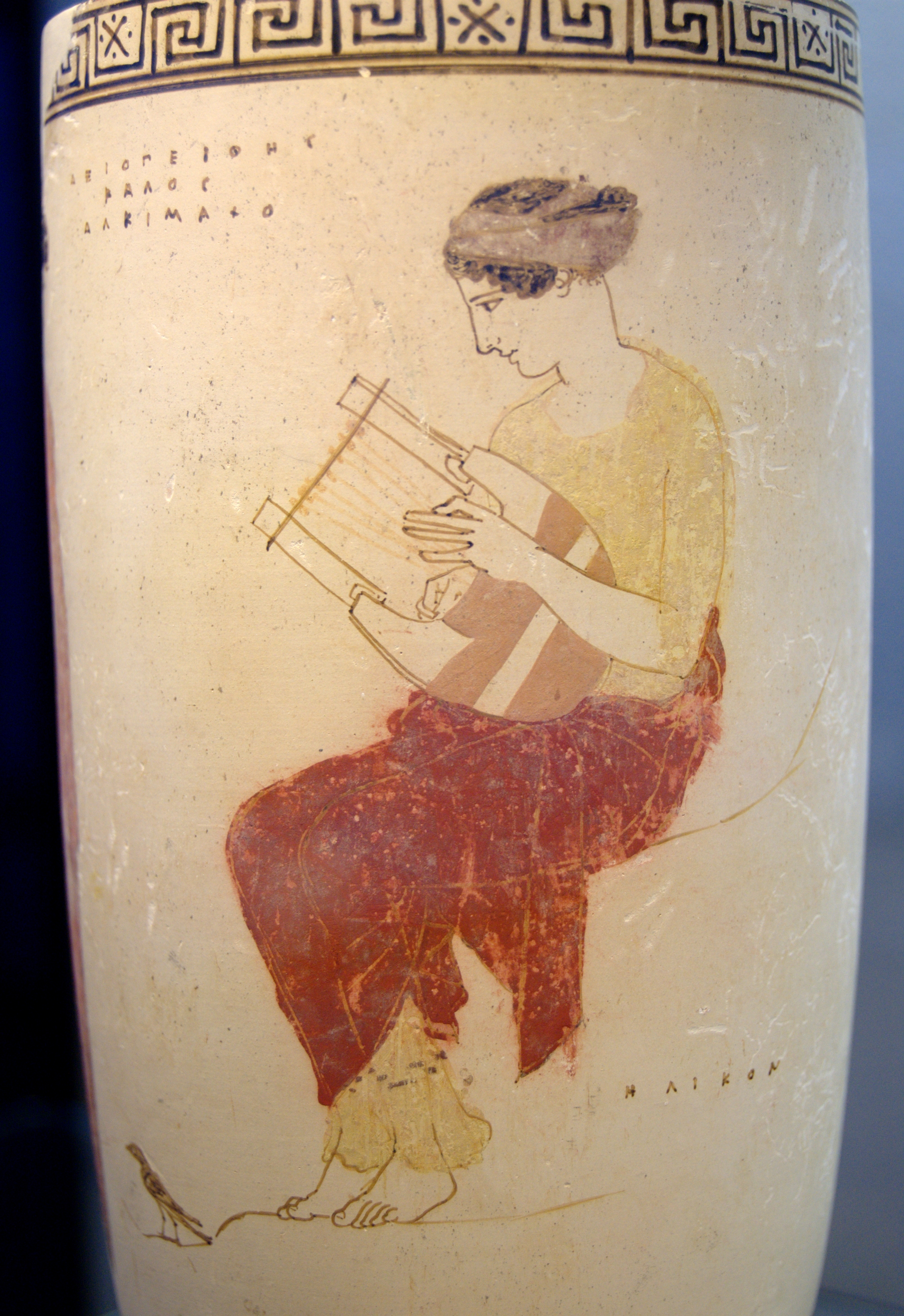
Image result for lyre
God damned hippy

So, I stumbled across the Shindo Renmei. An interesting group that sprang out of an interesting set of circumstances. It is a peculiarity in the truest sense of the word. Absolutely dependent on the specifics of its time and place.

That is the case with any bit of history.

So why study it?

The popular answer is so that we do not repeat it.

I see no reason to be contrarian. But I also see no reason for such narrow apologetics.

I think the main reason to study history is that it is a gold mine of catalysts and ideas. I think this is the main reason because it is so much more fertile. And also because the wise fear of repeating history is often hijacked by this or that pundit to cherry-pick examples that ‘prove’ why this or that is going to be catastrophic. Or more colloquially, “You’re just like a HitlerStalinTerrorist.”

I think it’s possible to extend this notion even further. This ‘mine’ is perhaps the ultimate case of art for arts sake. Art here being any endeavor including science and philosophy.

Art…or ‘well informed doodling’ should practiced precisely because practice begets art. There needs be no other reason. No harried seeking of supporting themes, or grants, or panty parting guitar solos but simply doing for doings sake.

So, go forth and study for no reason whatsoever.

In so doing I guarantee you’ll find one.


Call Me An Idiot Here

http://www.minds.com/Weirmellow

Or Here

mellow.mission.productions@gmail.com

Support This Here

http://www.subscribestar.com/TFJ

Or With PayPal

Support the Journal

Make a donation via PayPal to help zazz things up.

$1.00

Not Just Zazz…but Pizzazz

Too high class for regular Zazz? Help Pizzaz up TFJ!

$5.00

Why So Many Remakes? (Vlog)

When investors want a sure thing and artists no longer have a strong cultural foundation originality dies.

Subscribe To My Music/Freeflow channel here: Alex Weir Youtube


Call me an idiot here: http://www.minds.com/Weirmellow

Or here: mellow.mission.productions@gmail.com

Support This Here

http://www.subscribestar.com/TFJ

Or Via Paypal

Support the Journal

Make a donation via PayPal to help zazz things up.

$1.00


Not Just Zazz…but Pizzazz

Too high class for regular Zazz? Help Pizzaz up TFJ!

$5.00

Is Twenty-Seven the Perfect Time to Start a Band?

hqdefault


The popular conception is a hard thing to qualify. It is difficult to define a common view because there are so many common views. Yet it can be done. At least insofar as setting the stage for social, psychological, historical, and philosophical analysis.

There do seem to be pervasive opinions that though rarely vocalized may as well be set in stone.

For instance, everyone always expects artists and musicians to be young. At least no older than thirty. This is strange.

It might be because most bands that society is currently familiar with made their mark in their twenties.

There may be some biological reasons for youths blessing of artistic endeavors.

Neurology and the endocrine system come to mind. Then there are the social and psychological variables.

First there is the naivete that’s fertile ground for creative exploration, then there is abundant energy to till that ground, and finally, there is a drive to define and prove oneself. Society also fosters and encourages young creators* whereas there is a greater onus on the mature to be ‘responsible’ and ‘settled in.’

All these factors seem to wane as people age into their thirties. So is it meant to be? Should everyone north of thirty settle into the proverbial accountant’s office and repair their gutters on the weekends?

No.

First, there are many examples of artists who didn’t ‘make it’ until ‘later’ in life. Andreas Bocelli and Leonard Cohen to name a couple.

Second, there are many examples of artists who continued creating masterpieces throughout their lives. Bach springs to mind. As do Johannes Brahms, Richard Wagner, and Stevie Wonder.

Third, if one decides to view life as having many stages, then each stage of life has its own music its own landscapes to offer.

To begin the analysis of creative stages of life let’s examine the art of the young.

The case can be made that the young are too histrionic to produce anything of lasting value. As evidence, one can cite the similarity of subject matter and delivery of bands in the last century.

First, there is the sex, drugs, and joyously cacophonous ROCK starting somewhere around the time of ‘The Doors’ and lasting well through the eighties hair-metal scene. Libidinous excess and boundary flaunting tests of one’s limits through psychedelics and alcohol aren’t the only tritely recurring sins of the young.

There is also the angst and neurotic introspection of Grunge, Alternative, and Progressive genres that cropped up in the late eighties and still hold sway into the era of whistling ironic ukulele hipsterdom. Are maudlin sentiment and bitter emotion really the best subjects to set to music? The young musicians of the last three decades seem to think so.

Given its subject matter and focus, the art of the young has unsurprisingly taken a morbid turn. The 27 Club is ‘a notional roll of remembrance’ that pays homage to the fact that many of the 20th centuries musical luminaries died young. Numbers can be mystic things and the fact that Jim Morrisson, Jimi Hendrix, Kurt Cobain, and Amy Winehouse all died at 27 lends an air of tragic magic to that arbitrary figure. Hence the ‘colloquialization’ of ‘27 Club.’

Death has a certain finality that often lends weight and perceived substance to the art of those who passed. ‘The good die young.’

The audience ‘knew’ these folks as an explosion, as a passionate flame that burned too bright and quick, and suddenly there is the mystery of eternal silence. What more would they have made would they have said? What secret pain, what uniquely anguished insight not accessible to average joe, did these brilliant people harbor? What was it that made people who wrote such tuneful and evocative things so self-destructive?

It would be wrong to characterize these artists as immature. It is a silly business indeed to hover over history like a daft-shrink-bog-wraith psychoanalyzing the minutiae of the lives of its actors. Yet there does seem to be an air of self-fulfilling prophecy to the art of the young.

The deification of such art, the raising of it to some sort of deep expression of the human condition, while at times valid, can also be foolish and dangerous. It is the former because foolish and dangerous things are indeed a part of the human condition. It is the latter because despite the melodic and lyrical finesse of such works they were tainted by hormones and substance abuse. A tainting that leads to a sort of ‘Opera Buffa‘ where those who gained much admiration and success, freshly minted aristocrats in a sense, weren’t sated by such things and chose to become a tragedy for a convoluted sense of authenticity or psychic chaos magnified by chemicals and overcharged emotions.

The creative stages seem to fit pretty neatly into the categories of the prodigy, the rockstar, the craftsman, and the master.

  • The Rockstar has already been discussed, the rockstar is the art of the young, it is somebody that might very well be talented or not so talented but they have something to say and by God, they will say it.
  • The preceding ‘Prodigy’ is a precocious child with uncanny technical skills and well-directed enthusiasm.
  • The Craftsman is a stage that comes after prodigy and rockstar and is a person dedicated to the disciplined acquisition of skills and diligent creative output who has a broader repertoire of life experience to draw from and can do so effectively and judiciously.
  • The Master is the craftsman after many years of practice. One can look to Bach responding to the challenge of Friderich the II, improvising a three and then six-part fugue on a theme presented by that monarch.

The space of this essay will only allow the exploration of two out of four of the stages of creative life. So in light of all the information considered which would be best to unpack?

Since the ‘rockstar’ has been addressed it seems fitting to move next in line to ‘the craftsman.’

As the world approaches the cusp of a new decade, is it not fitting to promote a new sort of ‘27 Club’? Why not popularly consider 27 to mark the beginning of careers rather than looking with perverse expectation towards the demise of heroically dysfunctional musicians?

Twenty-seven may, in fact, be the perfect time to start a band. One still has abundant energy which can be used in conjunction with greater mastery over one’s emotions to select which insights and life experiences to magnify through art. Further, it is a time when hormonal needs and spastic bursts of energy will be less of a barrier to serious practice. Your bandmates are more likely to show up on time.

Why disparage the rockstar and highlight the craftsman?

The prodigy, the rockstar, and the master need no encouragement. They will do what they do as a matter of compulsion. The craftsman is the most suspicious of compulsion. As a person moving further into adulthood and feeling the weight of experience, the craftsman becomes wary and guarded, sensing a profounder need to be ‘serious and secure.’
Sometimes this need to be ‘serious and secure,’ to be a steady sort, manifests itself as studied avoidance of creative endeavors. Partly because one is keenly determined to avoid wasting time which has greater weight than ever before. Partly because one wants to avoid seeming gauche.

The truth is that music and art are never a waste of time. They sharpen all the skills and faculties necessary to succeed in work and relationships. Communication and synthesis are two skills most readily and deeply refined through creative endeavor. Atop this boon, there is another in that the magnification of life through art makes you very appreciative of even the most mundane and prosaic aspects of living.

There is nothing gauche about loving life or succeeding in relationships and the workplace.

These stages are of course guides rather than rules. Some may find themselves at a place of overlapping stages. Whatever stage you’re at…what are you waiting for?

Go forth and create.

*There will soon be another essay on the unique challenges of creative youths in the present college and structure obsessed society that purports itself to be a bastion of free-thinking creativity.

Related Links and Reading

https://www.digitalmusicnews.com/2015/08/03/18-musicians-who-made-it-later-in-life/

https://www.youtube.com/watch?v=4OtouQnfnZU

Keeping the Flame