I think that I heard somebody refer to scriptire (lol…scripture…but scriptire is even better) and ‘Judeo-Christian’ values as the scaffold for our culture in a debate.
While I don’t entirely agree I found the sentiment useful.
Art, literature, and craft of all kind is a scaffold from which we build the great palace of human experience. To lose that as I somewhat fear we may be would be a grave error.
This is basically just a monologue. The video is of a recent hike that I edited to look kinda grunge rock in Kdenlive.
The discussion centers around why lower quality video may be a better stylistic choice. Having more real than real HD can blur the line between reality and presentation in unwholesome ways.
The first part is me putzing around then I kinda do:An impromptu vlog on how to engage with life through art. How art and the development of skills and serious self-expression shouldn’t be reserved for a select Olympian few.
Don’t forget how great it feels to create. To have a finished product, or to be working towards a finished product.
People are often miserable. There are a billion things to be miserable about, many with good cause. But, there is balm, there is hope.
One way to allay misery is to create. This option is often forgotten through disuse.
Just like the person who doesn’t know how bad off they really were, how abnormal their state was, until they start exercising, folks who don’t create regularly forget that it is an option.
They forget that it is profoundly satisfying to assemble memories and ideas into coherency, to hone the turn of a wrist, or the flick of a brush, to near perfection.
Most of all, it seems that they forget that is possible. That it is an option open to everyone and not just folks inhabiting rarified heights fortified by talent and divine favor. How would you even be able to enjoy such things if you didn’t contain the seed of their genesis?
When one ceases that most natural of human activities, or allows it to dwindle to occasional outbursts, let’s that mighty river become a trickle… Satisfaction becomes damnably difficult. Everything seems spartan, prosaic, and utilitarian. And even the spartan, prosaic, and utilitarian things, don’t hold the stoic magic that they should.
Computer screens seem crisper, the neatly arranged icons carry intent, the white broken stripes of a roadway are very nearly a poem, the feel of a key beneath the forefinger entices toward a greater dance. Then there is the electric hum. You are turned on. Why would you ever want to be turned off?
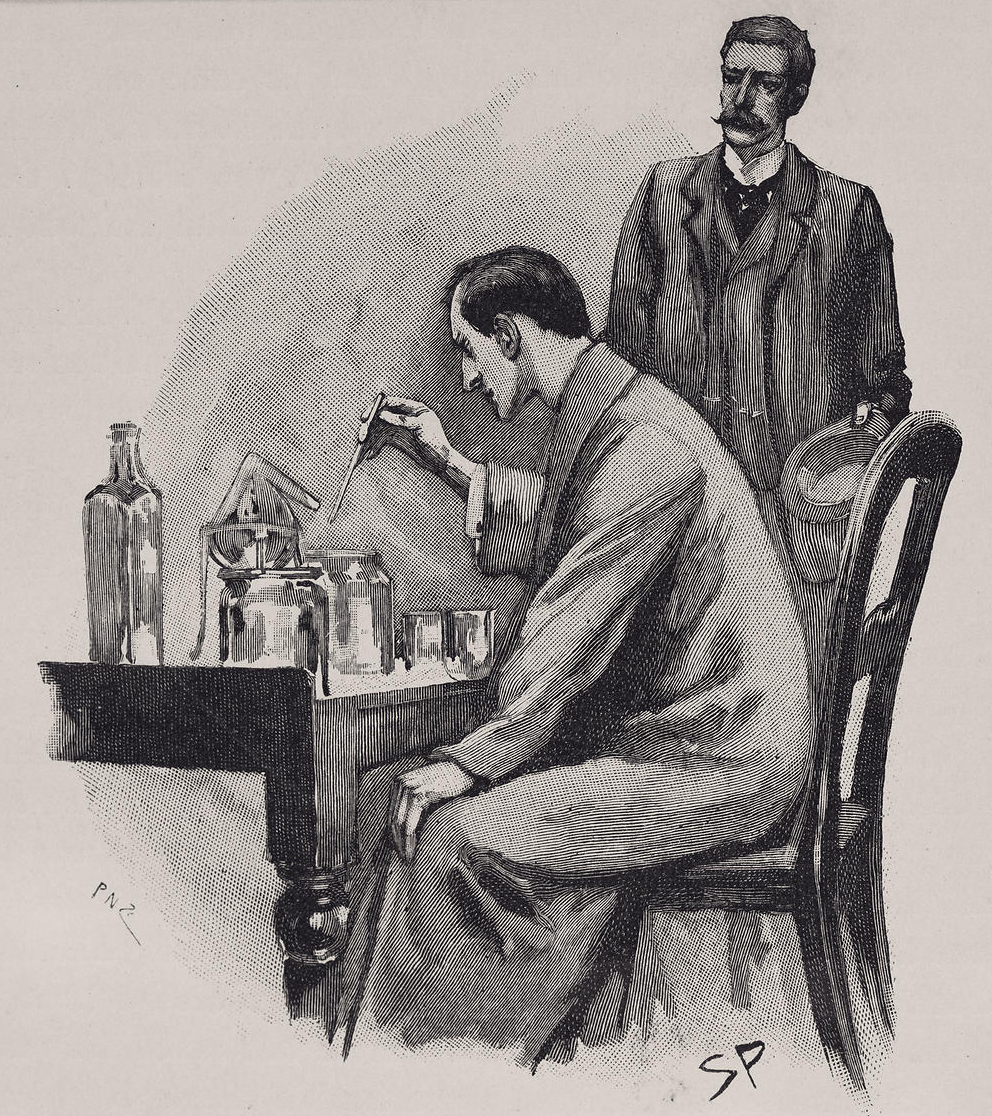
Really couldn’t settle on a relevant picture. Holme’s was an analyst extraordinaire.. and there’s some sort of thing on the public channels about Queen Victoria. So good enough.
Apologies for issues with the formatting, I ran out of time, and hope to be able to fix the eyesore within the coming week.
The term integrative analysis is generally used in an ‘applied science’ context. ‘Big Data Companies’ such as IGI Global define it as:
1. Analysis of heterogeneous types of data from inter-platform technologies.
Inter-platform technologies mean that the machines and instruments used to gather data are combined into a cross-platform system for integrative analysis of diverse data-sets; which often results in an emergent framework.
That’s still a bit clunky. A better take may read something like: using data from different measurements and processes and combining it to find new patterns that lead to new hypotheses, and discoveries, in so doing paving the way for yet more hypothesis and discoveries.
So in essence just plain old science. But there is a distinction. In that, this is plain-old science at an incredible pace. Augmented in the case of IGI and similar ventures by computing and highlighting the need for the synthesis of such technology assisted derivations in iterating novel solutions.
I am taking pains to describe the more prevalent (industrial, professional, sic) use of integrative analysis to avoid confusion about its operational definition as regards this journal.
At the core of this sophisticated-sounding term is a simple concept. In essence integrative analysis is about not missing the forest for the trees. And actually, it goes a step further than that in not missing the trees for the forest.
That’s what I love about ‘Integrative Analysis’ – It is a top-down, bottom-up, object-oriented sort of thing. Not tarrying too long within the restrictive parameters of any one iterative methodology.
Why apply such a term to a somewhat artsy, ‘philosophical’ website like The Fractal Journal?
In short: spillover. What I mean by this is that the incredibly successful scientific practice of reductionism has bled into other disciplines, like journalism, the arts, and philosophy.
I am by no means ‘anti-reductionist.’ I view ‘reductionism’ as an indispensable weapon in the arsenal that will help humanity win the war for understanding. It yields results because it’s intuitive, focused, searchlight helps us break down processes and problems into workable parts.
Reductionism has always gone hand in hand with bottom-up methodologies. In which the parts, once understood as distinct, are reassembled into an integrated whole. So why proclaim any level of novelty or lavish special attention to ‘integrative analysis.’
Well, simply because two things go hand in hand, doesn’t mean that their relationship is always balanced. I don’t know if it has to do with the psychology of folks given to the hard sciences, or is simply due to the intrinsics of the hard sciences, or some combination of these factors but the balance has certainly seemed to be in favor of reduction (At times even ‘reductio ad absurdum’).
Really, I think that this has something to do with the greater need for specialization as the complexity and depth of respective fields emerges.
Or, more specifically: The focus of respective disciplines despite sharing a common core of basic scientific principles has titrated down to rather over-isolated little monads. This being the result of over-reliance on reductionism, perhaps by necessity.
There have been folks more qualified than I who’ve commented on such trends, like the biologist E.O. Wilson, who calls for the need for a return to more classic conceptions, with a focus on synthesis over isolation. (That is my takeaway from his book Consilience and should not be read as a definitive statement of Wilson’s position.)
This trend of over-reliance on reductionism has led to the unnecessary and destructive Balkanization of disciplines. While there is a need for distinction, there is no need for rigid walls. In fact, such walls render the world of science and the humanities more sterile than they need be.
Synthesis, integration, of data and ‘models’ derived from reductionist processes, is what The Fractal Journal is about. The emergent frameworks like the ‘fractal analogy’ of its namesake are why I think it valid to use ‘integrative analysis’ as a subheading.
Despite the journal’s broad range of topics, and its use of artsy and informal means of framing information and exploring subjects, it does engage in ‘integrative analysis.’
Though it isn’t a highly specific computer-assisted search for ‘proof of concept’ it does nonetheless venture into serious, structured analysis of parts and systems. Since it does so with an especial focus on highlighting the overlap of parts and systems it can fairly be called integrative.
I’ve often found this need for integration elegantly highlighted. Just today while doing background reading for the first chapter of my water book, I jumped from covalent bonds to valence, to heuristics, and finally to the Inventor’s Paradox. All these things were interconnected via Wikipedia because they are interconnected conceptually. This is the first proof of the integrated nature of reality that I witnessed just a few hours ago.
The second proof is the ‘Inventor’s Paradox’ itself. The inventor’s paradox lies in the domain of problem-solving. It addresses the very heart of the problem with over-reliance on reductionism; by pointing out the somewhat counter-intuitive fact that sometimes broadening your search, helps you find a specific solution.
The paradox was introduced by George Polya in his book How to Solve It:
– The more ambitious plan may have more chances of success […] provided it is not based on a mere pretension but on some vision of the things beyond those immediately present.
When you are attempting to solve a problem in the reductionist style, which really is the natural, and intuitive style, you use Occam’s Razor to remove as much ‘excessive variability’ as possible.
I know that some people consider it gauche to quote Wikipedia directly, but I really found the way reduction’s problem was painted there rather elegant:
“Doing this can create unforseen and intrinsically awkward parameters.”
I really like that phrase ‘intrinsically awkward parameters’ because it’s a really apt way of portraying the limitations of reductionist methodologies. Too narrow a focus, too specific an explanation, leaves you more vulnerable to stagnation via the illusion of having arrived at either an answer or an impasse. It is the ultimate missing of the forest for the trees.
It always reminds me of a wonderful evening I had about half a decade or so ago. My ladyfriend, my best friend, and I were all hanging about a house she’d been allowed the use of. Lounging about, washing away the taste of cheap cigarettes with cheaper wine we were a perfect portrait of decadent Bohemians. She fancied herself a visual artist, or at least that was what she’d intended her university to teach her, till it convinced her to lean towards marketing. So, she had many a drawing supply at hand.
My buddy and I who were more musically and mathematically inclined decided on a whim to abandon our bantering about on a couple of guitars to join her in drawing. This is where the psychological and methodological differences relevant to this essay came into play.
I am a sketcher. I draw broad and messy things and eventually whittle them down to finer details. My buddy who’d I’d never seen draw before was a solid line, boom, there’s the thing, no bs, sort of fellow. I think he’d drawn a parrot or a penguin or some such thing with very clearly and neatly defined lines and structures. It was like an ‘engineer’s blueprint’ of a caricature of a penguin. I think this unsurprising given his facility with programming and mathematics.
I believe that on this night we had a nautical theme going. Perhaps owing to the presence of Rum somewhere on the premises. Hence the parrot or penguin or what have you.This ambiance led my storyteller’s mind to form all sorts of imagery from bits and pieces of literature I’d read over the years. I’d drawn something akin to a villa on the coast, luxuriating, on a clifftop above a bay lined with ships. Aesthetically it was somewhat lacking but intelligible enough. It did not have the neatness and the crips pleasant feel of my friend’s parrot. But it did have something else: context.
Context to me is the aim of integrative analysis. Rather than a very clear, and pretty, solitary parrot, of an engineer; a contextualized version would have that parrot atop the shoulder of a rum-swigging pirate, standing in the crows nest, amidst a placid sea. Something that an architect may be more likely to produce.
Really, this could be taken even farther.
Terrence McKenna said in one of his many lectures that people tend to be either seers or readers. I think this has some validity demonstrated through the story above.
I consider myself to be a reader. Seeing things and extrapolating a meaning, a context, which I then display. A seer sees a monad, a thing in isolation, but in exquisite detail, its background might be hazy, but the thing in itself is there, complete, coherent, etc.
I think it important to merge these two inclinations as much as possible. I think this important because the world is not bottom up, or top down, or even object-oriented. It’s up and down, and bottom up, and goes every which way.
….but in every which way within reason. It is the search for that reason that humanity has embarked upon and which The Fractal Journal is glad to support and celebrate.
The popular conception is a hard thing to qualify. It is difficult to define a common view because there are so many common views. Yet it can be done. At least insofar as setting the stage for social, psychological, historical, and philosophical analysis.
There do seem to be pervasive opinions that though rarely vocalized may as well be set in stone.
For instance, everyone always expects artists and musicians to be young. At least no older than thirty. This is strange.
It might be because most bands that society is currently familiar with made their mark in their twenties.
There may be some biological reasons for youths blessing of artistic endeavors.
Neurology and the endocrine system come to mind. Then there are the social and psychological variables.
First there is the naivete that’s fertile ground for creative exploration, then there is abundant energy to till that ground, and finally, there is a drive to define and prove oneself. Society also fosters and encourages young creators* whereas there is a greater onus on the mature to be ‘responsible’ and ‘settled in.’
All these factors seem to wane as people age into their thirties. So is it meant to be? Should everyone north of thirty settle into the proverbial accountant’s office and repair their gutters on the weekends?
No.
First, there are many examples of artists who didn’t ‘make it’ until ‘later’ in life. Andreas Bocelli and Leonard Cohen to name a couple.
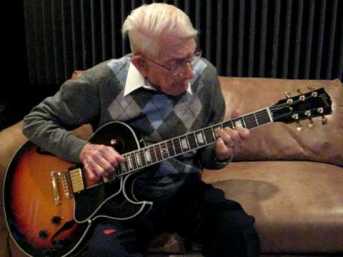
Second, there are many examples of artists who continued creating masterpieces throughout their lives. Bach springs to mind. As do Johannes Brahms, Richard Wagner, and Stevie Wonder.
Third, if one decides to view life as having many stages, then each stage of life has its own music its own landscapes to offer.
To begin the analysis of creative stages of life let’s examine the art of the young.
The case can be made that the young are too histrionic to produce anything of lasting value. As evidence, one can cite the similarity of subject matter and delivery of bands in the last century.
First, there is the sex, drugs, and joyously cacophonous ROCK starting somewhere around the time of ‘The Doors’ and lasting well through the eighties hair-metal scene. Libidinous excess and boundary flaunting tests of one’s limits through psychedelics and alcohol aren’t the only tritely recurring sins of the young.
There is also the angst and neurotic introspection of Grunge, Alternative, and Progressive genres that cropped up in the late eighties and still hold sway into the era of whistling ironic ukulele hipsterdom. Are maudlin sentiment and bitter emotion really the best subjects to set to music? The young musicians of the last three decades seem to think so.
Given its subject matter and focus, the art of the young has unsurprisingly taken a morbid turn. The 27 Club is ‘a notional roll of remembrance’ that pays homage to the fact that many of the 20th centuries musical luminaries died young. Numbers can be mystic things and the fact that Jim Morrisson, Jimi Hendrix, Kurt Cobain, and Amy Winehouse all died at 27 lends an air of tragic magic to that arbitrary figure. Hence the ‘colloquialization’ of ‘27 Club.’
Death has a certain finality that often lends weight and perceived substance to the art of those who passed. ‘The good die young.’
The audience ‘knew’ these folks as an explosion, as a passionate flame that burned too bright and quick, and suddenly there is the mystery of eternal silence. What more would they have made would they have said? What secret pain, what uniquely anguished insight not accessible to average joe, did these brilliant people harbor? What was it that made people who wrote such tuneful and evocative things so self-destructive?
It would be wrong to characterize these artists as immature. It is a silly business indeed to hover over history like a daft-shrink-bog-wraith psychoanalyzing the minutiae of the lives of its actors. Yet there does seem to be an air of self-fulfilling prophecy to the art of the young.
The deification of such art, the raising of it to some sort of deep expression of the human condition, while at times valid, can also be foolish and dangerous. It is the former because foolish and dangerous things are indeed a part of the human condition. It is the latter because despite the melodic and lyrical finesse of such works they were tainted by hormones and substance abuse. A tainting that leads to a sort of ‘Opera Buffa‘ where those who gained much admiration and success, freshly minted aristocrats in a sense, weren’t sated by such things and chose to become a tragedy for a convoluted sense of authenticity or psychic chaos magnified by chemicals and overcharged emotions.
The creative stages seem to fit pretty neatly into the categories of the prodigy, the rockstar, the craftsman, and the master.
The Rockstar has already been discussed, the rockstar is the art of the young, it is somebody that might very well be talented or not so talented but they have something to say and by God, they will say it.
The preceding ‘Prodigy’ is a precocious child with uncanny technical skills and well-directed enthusiasm.
The Craftsman is a stage that comes after prodigy and rockstar and is a person dedicated to the disciplined acquisition of skills and diligent creative output who has a broader repertoire of life experience to draw from and can do so effectively and judiciously.
The Master is the craftsman after many years of practice. One can look to Bach responding to the challenge of Friderich the II, improvising a three and then six-part fugue on a theme presented by that monarch.
The space of this essay will only allow the exploration of two out of four of the stages of creative life. So in light of all the information considered which would be best to unpack?
Since the ‘rockstar’ has been addressed it seems fitting to move next in line to ‘the craftsman.’
As the world approaches the cusp of a new decade, is it not fitting to promote a new sort of ‘27 Club’? Why not popularly consider 27 to mark the beginning of careers rather than looking with perverse expectation towards the demise of heroically dysfunctional musicians?
Twenty-seven may, in fact, be the perfect time to start a band. One still has abundant energy which can be used in conjunction with greater mastery over one’s emotions to select which insights and life experiences to magnify through art. Further, it is a time when hormonal needs and spastic bursts of energy will be less of a barrier to serious practice. Your bandmates are more likely to show up on time.
Why disparage the rockstar and highlight the craftsman?
The prodigy, the rockstar, and the master need no encouragement. They will do what they do as a matter of compulsion. The craftsman is the most suspicious of compulsion. As a person moving further into adulthood and feeling the weight of experience, the craftsman becomes wary and guarded, sensing a profounder need to be ‘serious and secure.’
Sometimes this need to be ‘serious and secure,’ to be a steady sort, manifests itself as studied avoidance of creative endeavors. Partly because one is keenly determined to avoid wasting time which has greater weight than ever before. Partly because one wants to avoid seeming gauche.
The truth is that music and art are never a waste of time. They sharpen all the skills and faculties necessary to succeed in work and relationships. Communication and synthesis are two skills most readily and deeply refined through creative endeavor. Atop this boon, there is another in that the magnification of life through art makes you very appreciative of even the most mundane and prosaic aspects of living.
There is nothing gauche about loving life or succeeding in relationships and the workplace.
These stages are of course guides rather than rules. Some may find themselves at a place of overlapping stages. Whatever stage you’re at…what are you waiting for?
Go forth and create.
*There will soon be another essay on the unique challenges of creative youths in the present college and structure obsessed society that purports itself to be a bastion of free-thinking creativity.
I made a vlog about how you can use Bach to tidy up your brain and prepare you for practice. There’s also some brief discussion of the value of classical imagery versus ‘meme-ish’ caricatures. Don’t get me wrong I do love my memes. But there’s a world of difference between meat and potatoes vs. cheesecake and Scotch.
Did you see that smug look! I thought I was being scholarly. There’s no such word as Genossischkheit as per my web query. Nonetheless I take poetic license and dub this Genussiness which is a word for enjoyment without abandon.
Subjects Discussed
1) Music and how neat it is that instruments are much more readily available due to financing options like rent to own.
2) ‘Violin Yoga’ or using an instrument to center yourself rather than some esoteric practice or as a complement to your esoteric practice.
3) How learning different instruments are good for getting a better feel for music quicker. IMO.
4) Genussiness – the best way to approach life in the context of the knowledge of death. Which in my opinion is using things like art and music to help you live life to the fullest without the opera buffa of being a ‘tragic artist.’ Enjoyment without abandon. The union of the bridge builder and the painter.
5) The environment through the lens of Michael Crichton’s book State of Fear and E.O. Wilson’s book Consilience.
6) How despite having an art friendly culture it’s often difficult to find work and get along with other artists.
7) An attempt to point out how good things are despite the serious challenges I brought up.



 The Fractal Journal