Dana Goodyear (The New Yorker) recently visited Axon, formerly Taser. I use this story as a springboard for a discussion on policing, surveillance, and citizenship.
I stall for time! In the coming days, I will post a fairly in-depth analysis of internet issues and the recent Vanity Fair Article about Tim Berners-Lee and his new project called ‘SOLID.’
For now, I just give a brief overview of the problem domain and my first impressions of the article.
Everyone does. Because everyone understands that no action occurs in a vaccum and is thus inherently multifaceted.
There’s a New York attorney called Aaron Schlossberg who was recently the subject of much controversy.
He took issue with some employees at an eatery. The issue was that they spoke Spanish. He went on a bit of a rant about how he as an American pays for the welfare of these potentially illegal immigrants. That they should speak English etc.
This tirade went viral. The publicity caused Schlossberg so much professional damage that he was even at risk of being disbarred.
This little episode has so many implications that I feel it would be irresponsible for me as a writer and citizen to pass it up.
First, it is demonstrative of a great many things. The impact of social media, the by now tiresome talking point of political polarization, and the nature of modern social expectations.
Let’s unpack that.
Social media is what allowed the incident to gain traction so quickly and in such numbers that it was able to put pressure on Schlossberg’s employers. Social media is also the technology that allowed those who took issue with Schlossberg’s actions to coordinate what can only be described as harrasment.
Political polarization is the fuel that powered both Schlossberg’s ire and the reaction of those seeking the destruction of both his professional and personal life. These two sides of the same coin only reach this sort of fever pitch in the presence of heavy ideological conditioning.
Social expectations today seem to include an insistence on certain points of politesse while completely flaunting general timeworn standards of civil interaction. Schlossberg said something politically unpopular in an aggressive way. Given the overwhelming abundance of casual swearing, in your face banter, and general penchant for sarcasm that permeates American society, it’s not unreasonable to assume that Schlossberg’crucifixionon likely resulted from unpopularity rather than aggression.
All these implications raise questions that I feel are essential to make.
First, social media, is it destructive and if so what can we do about it?
Like any other tool, I don’t think that social media is inherently destructive. The nature of social media seems to tend toward being a catalyst. A catalyst can produce either a favorable or unfavorable reaction. The swelling of outrage that culminated in trolling a private citizen with live Mariachi music and fiestas around his apartment can also be quelled by voices advocating for rationality.
One subcaveat of this social media thing is privacy. Is it fair to take a private citizens outburst and post it online?
Is it fair to then use this evidence to coordinate harassment?
It is true that Mr. Schlossberg was in a public area, behaving very rudely, and that people certainly have the right to film others in public. But does this make it alright for the offended to magnify the event through social media, and in essence involve the entire world in one man losing his cool?
Mr. Schlossberg was not acting civilly but he certainly wasn’t doing anything illegal.
Should we put restrictions on social media posts about private citizens controversial behavior? Should we put restrictions on using such videos to coordinate retribution. Should losing your cool or acting uncouth be so easy to shame from the rooftops?
This technology raises a lot of policy questions which seem to only increase in both number and scope.
I think that it’s a subject that will likely warrant its own article and video.
The second question then is what can be done about political polarization? I think the answer is obvious. Those of us that favor nuanced discussions need to become more vocal and advocate for rational discourse in greater numbers. The popularity of tactics like memes and trolling while fun and not necessarily out of line with the spirit of effective discourse shouldn’t be at the forefront of discourse.
The final question is related to social expectations. Both the public and employers have social expectations. Where, how, and to what extent should such expectations impact the lives of individual citizens?
Wherein does a professional get leeway to act unprofessionally? Being rude certainly falls well within the protection of the first amendment. But, companies can and do exercise the right to fire employees for misconduct. This right is also well within the bounds of the US Constitution.
However, an interesting subcategory emerges here. Namely, should a company be allowed to fire an employee for unprofessional behavior outside of work? If Mr. Schlossberg is good at his job, and reasonably civil in the confines thereof, should his social and political views and faux-pas be cause for termination? If so, then on what legal grounds can he contest the termination?
There do seem to be precedents for firing folks for extracurricular activities. In 2004, Ellen Simonetti was fired for taking pictures of herself in her Delta uniform as she lounged across the backs of airplane seats. The photograph which she posted to a blog about stewardessing, that she’d started in order to cope with the loss of her mother, wasn’t racy even by 1950’s standards. But nonetheless, Delta considered it unprofessional and sacked her.
My position is that Simonetti should not have been fired. Schlossberg has even less reason to be fired/evicted/disbarred etc. than she does. This is because he was not on company property, representing his company, or wearing company paraphernalia when he had his outburst.
His history of outbursts, including one where he ran into a radnomer with his bag and called him a ‘dirty foreigner’ might be a minor case of harassment or perhaps assault. Which I could see as being unsavory for an employer. But, again where should the line be drawn? There wasn’t really any battery, and the harassment was brief, akin to a middle finger on a busy street.
Should a line be drawn at all? Or should employers/landlords continue to wield carte blanche to terminate otherwise competent employees on grounds of unsavory conduct?
When looking at this case I ran across the notion that Schlossberg’s career was destroyed by the people he’d offended. This, to me, is where it gets a tad murky. Schlossberg initiated the aggression, in a public space, he is aware of cell phones, and he is aware of social media. While I 100% sympathize with the notion that the possibility of backlash shouldn’t intimidate Schlossberg or anyone into silence or even politesse, I can’t really view him as a victim. Even if I did, the link between those who posted the video and coordinated the harassment and his termination remains tenuous. Because it was still up to his employer to make the decision, and more importantly, it was up to him to avoid being confrontational.
Running up to randomers to call them dirty foreigners, haranguing Spanish speaking employees, and similar hijinks aren’t really public discourse. They’re outbursts and while they are protected under freedom of speech, that freedom doesn’t necessarily shield you form things like social ostracization, or job loss.
I don’t think either of those things should be the result of making an ass of yourself. However, if you work in a sector that requires a great deal of civic responsibility, being consistently combative, is likely a poor career choice. Whether that’s done on your own time or not.
As you can see, this is a really multifaceted issue that raises many questions. I encourage everyone to comment below, whether you agree or disagree with this analysis.
I consider it copyrighted, as I plan to publish it, or a version of it as part of the aforementioned book. That doesn’t mean you can’t link or do whatever. Just that you can’t do it commercially and that I’d prefer to know about it.
This book is dedicated to Galina V.W., who twice the mother, raised her grandson as lovingly as she raised her son.
The Case for Care
How does one begin to care about water? Water being a thing generally only thought about when you’re thirsty or need a wash. How does one begin to care about something that just falls from the sky? Care enough to write a book on it?
Sometimes life’s projects spring out of nowhere. That is until you take the trouble to track ‘em back to their source.
This particular endeavor may have started when Doctor Walter (Pseudonym), my HS Earth Science teacher, mentioned that water might become an issue in coming decades.
That idea sat in the back of my mind for years. Dormant and drowned out by all the usual business and distraction of being a young man. It wasn’t til I stumbled upon Consilience, The Unity of Knowledge, nearly a decade later, that I was reminded of the reality of limited resources.
Consilience isn’t an environmental book. It’s more one of those intellectual adventures. The sort that scientists set out on when facing the seductively beckoning sea of life’s mysteries. Consilience is biologist E.O. Wilson’s ‘all-in-one’ foray into the history of philosophy and science. It’s a highlighting of how this history reveals an inherent overlap, or ‘jumping together’ of knowledge from various disciplines. One that occurs in concert with his own insightful musings, on how such consilience may soon more fully occur. Though I disagree with much found in its pages, I’d highly recommend it as a fascinating read.
The work’s pertinent part for this particular project came at the end of the book. Which at one point discusses the vast expenditures of energy and resources necessary to sustain life today. Discovering the sheer amount of water involved is what triggered the memory of old Doctor Walter’s cautioning.
This recall and its attendant realizations are the reason for why I learned to care about water and why I wish to impart that care to readers of this book.
Care is often stigmatized by the twin burdens of trouble and responsibility. Yet care can also be fascinating. It can in fact be a great deal of fun. It can animate certain dormant sensibilities, that nourish and revitalize the spirit, and lead you to myriad adventures and discoveries.
Another natural consequence of care is of course cultivation. Care leads to the cultivation of spiritual, intellectual, and physical powers. Powers that are indispensable in the most precious and precarious sort of cultivation. A cultivation called agriculture and industry. Twin disciplines upon which all of our lives depend and which are in turn wholly dependent on water.
There will be much on this in coming chapters. For now I ask that you be so kind as to humor my penchant for introspection.
I like to introspect. I find it to be an excellent exercise for developing strong creative and critical thinking faculties. These skills have always been essential. Perhaps it is a mistake to say that they are needed now more than ever. But, I’m going to say it.
I’m saying it because although the world is as complicated as it always was, we are more complicated than we have ever been before. The machinery and administration of our societies is vast, labyrinthine, and interdependent. For these reasons, and perhaps ‘just because we can,’ we developed the ability to communicate instantly across oceans and continents. As a result information bombards us at an unprecedented rate.
Lord, how our information increaseth. Indeed.
Our familiar manner of relating to one another, of interacting with the environment, and the ‘qualia’ of our institutions have all undergone drastic changes.
All of these things call for well developed faculties. It will take strength, wit, compassion, and resolve to continuously thrive in a world of 7.6 billion people, large hadron colliders, and dead zones. It will take introspection.
This is why I weave psychological, philosophical, and sociological analysis into a basket, that would already be complete, even if assembled from the barest essentials of science and reporting.
I would not be able to practice such a delicate art. The art called ‘integrative analysis’ without a healthy dose of introspection.
‘Integrative analysis’ is the multifaceted discipline foreshadowed by the catalyst for this work: E.O. Wilson’s Consilience. It is consilience.
Nowhere is it more necessary than today’s interdependent, overlapping, high speed world. A world that produces words like Biogeochemical.
Biogeochemical should have been the watchword of the 20th century. The passage of chemicals between living things and the environment is a cycle that requires rapt attention. Perhaps if such attention was given there would have been yet more geniuses and poets. There is much to unpack in the latter statement. For the purpose of the introduction I will simply say: Preventing illness and death is why we must strive to make Biogeochemical the watchword of the 21st century.
The very nature of the word is multifaceted. It is a testament to the increasing complexity of living in a universe that is inherently, unfathomably intricate. It is why I practice and stress the need for developing a strong capacity for integrative analysis.
I think it worth mentioning that good analysis requires hard work and resolve. Neither hard work nor resolve are possible if you fall into the trendy nihilism that’s still somewhat in vogue. This nihilism has at its core a bizarre sort of overdeveloped minimalism. It is a bastardization of utilitarianism. One that has kept me, and I dare wager a good deal of others; from accessing the energy, resources, and will necessary to fight the good fight.
It was recalling Doctor Walter’s words as I was reading Wilson’s work that led to this present volume.
This recall came at a fortuitous time. That is if you consider the creation of a book fortuitous. I was looking for something to do. I knew that I had to do something. I’d spent too much time looking and studying and not enough time doing. I weighed the merits of various enterprises and remembered that I’d always intended to write.
While, you’re welcome to disagree with my self-assessmsent. Writing is something I consider myself good at. Words and ideas come with ease and coherency. Something more the result of having a love of reading instilled in me early than any inherent braininess.
The fact that writing came naturally, the idea that books didn’t have utility in the same way an algorithm does, and the saturation of the writing market; are some of the reasons I viewed a writing career dimly.
I needed to get a ‘real job’ and build ‘real skills.’ Not do something that was ‘easy’ and fun. I bounced about from odd-job to odd-job, attempting to teach myself computer programming, because things have to have ‘utility’ you know.
Rediscovering the water issue was a fortuitous catalyst. It was an issue that my skill could shake a stick at. Even better it was an issue that had utility.
How does writing solve issues? Well, it doesn’t but it may help along the process. (The very fact that I feel the need to say this is testament to the trendy utilitarian nihilism mentioned last section.)
Part of solving a problem is having a good grasp of it and that only comes from thinking. Writing being formalized thinking seems perfect for the job. While I may not solve anything per se, I can serve as a signpost for professionals and laypeople alike.
The Flavor
Many readers pore through the introduction to see if a book is up their alley. They’re always trying to get a taste for the flavor of it. To see if they like it.
I’ll flat out save you the time and give you a taste.
It is true. Every book has a flavor. This book is no different. It will take you on a journey through the fascinating intersections defined by the axis resource known as water. It will be both a lesson and a story.
This is my first non-fiction book. It is narrative journalism. According to thebalance.com narrative journalism is:
“An immersive style of storytelling, narrative journalism is used to captivate readers by drawing them into a story with greater detail than is found in traditional news stories. It is a popular format for magazines such as the New Yorker and can difficult to define and write.”
I love stories, I love finding things out, and I dig a challenge. So this medium seems exactly up my alley.
I don’t think that any of the above traits are special. They’re up everybody’s alley. There’s a lot of joy to be had in reading a hard-won story about the real world. It’s a joy that’s on par with creating the story. One that I was delighted to experience as I did the background research necessary to launch this project.
Since the New Yorker was mentioned, I’d like to suggest that my readers whet their appetite for narrative journalism, by reading The Lost City of Z by David Grann. It is free to access on their website.
The spirit of exploration is one that I’ve always held in high regard. A flame that needs stoking, in a world that believes it’s been mapped and mounted, like some hapless gossamer butterfly in a Victorian collection.
It is in the interest of rekindling such time-honored passions, that I began writing a jungle adventure inspired by all the Doyle, Crichton, and Lovecraft I pored over in my adolescence. (Of course Alan Watts and Terrence McKenna played a role as well.) Researching for The Sketch of Sam Monroe(estimated completion:1st Quarter, 2019 ) led me to Grann’s article. It is a worthy read.
If you dig jungle books, and aren’t too uncomfortable with salty language, and psychedelic silliness, please check out the intro and first couple of chapters on my website: fractaljournal.com.
I believe that jungles are useful metaphors for getting to grips with things and for kindling the spirit of exploration.
Getting a grip on the water issue is a jungle in its own right.
There is some salty language briefly. It is included because it is how some people talk. Skip it if you’re offended. There’s lots of content here.
Edward R. Murrow
Don’t Be Defensive
I’m always going to remember sitting in my techie friends small office bedroom, on the big medicine ball, serving as the only available guest chair. There was no bed. Simply a hammock and two high powered PCs. I’m always going to remember it because it’s damned quirky.
I’ve been meaning to learn Java since I found out about it around 2007. I didn’t have the knack for it, but I’m stubborn, so I still have that goal on the back-burner to this very day, a full decade later.
I’ve made some modest progress, over the last couple of years towards that end. I’m a writer so I’m a narrative guy (Learn through/Thrive on: stories), so careful reading, and lots of web queries on background info were my go to.
Slowly but surely, through lots of notes on the free tutorial provided by HWS, and Niemeyer & Leuck’s: Learning Java; I’ve been able to absorb enough basic principles to where I don’t feel completely lost, as I feed bad code into NetBeans.
It was my geeky reading habits, and the opportunity to exchange off-color jokes that found me in the strange little blue room.
We were having a discussion on the strengths and weaknesses of various programming languages.
There was a stack of programming manuals on the desk. I asked about C++ and the book. And then somehow, the conversation turned to the creator of the language, and author of that particular volume: Bjarne Stroustrup.
“O he’s a little bitch.”
I thought this odd.
“That book…it’s …he’s just…”
I really didn’t have a comment. But not for any nobler reason than sheer ignorance.
“He’s just such a defensive little bitch.”
“How so?”
“It’s just he goes on and on…just complaining…he’s almost whiny…like I can’t stand it. You shouldn’t have to explain why something is good, he just comes off as super insecure, it’s a pain in the ass to read.”
“Well,” I said as my writer’s sympathy kicked into high gear, “critics are assholes, often dishonest assholes, dishonest partisan assholes, and I bet a buncha C Nazis were giving him hell, I don’t think addressing criticisms and misunderstandings is defensive.”
“Eh…yeah…but the way he does it. It’s just…cringy. You should just make something so good that you don’t have to explain why it’s good.”
“Yeah, but what if ya did, and a buncha schmendricks picked it apart, and just painted a totally inaccurate picture of it…”
“Yeah, I get that, but it’s just not as good of a book as it could have been if he wasn’t so fuckin’ whiny. And like…you should make something so good…that no one can say shit about it. Period.”
This conversation went on for a while, it is one that I’ve committed to memory, as it’s indicative of a certain attitude that needs addressing. It is an attitude that I find to be common among techies, medical professionals, and business-people. It’s a certain overdeveloped minimalism that breeds error, haughtiness, and hypocrisy.
‘Actions Speak Louder Than Words’
My friend isn’t stupid. The idea that you can create something that’s unassailably good, was just a result of the hyperbolic way we talk. If such a thing as perfection existed, I think that human beings would still find ways to fault it.
What I found staggering about my conversation is that, there was that element of ‘you shouldn’t have to explain things.’
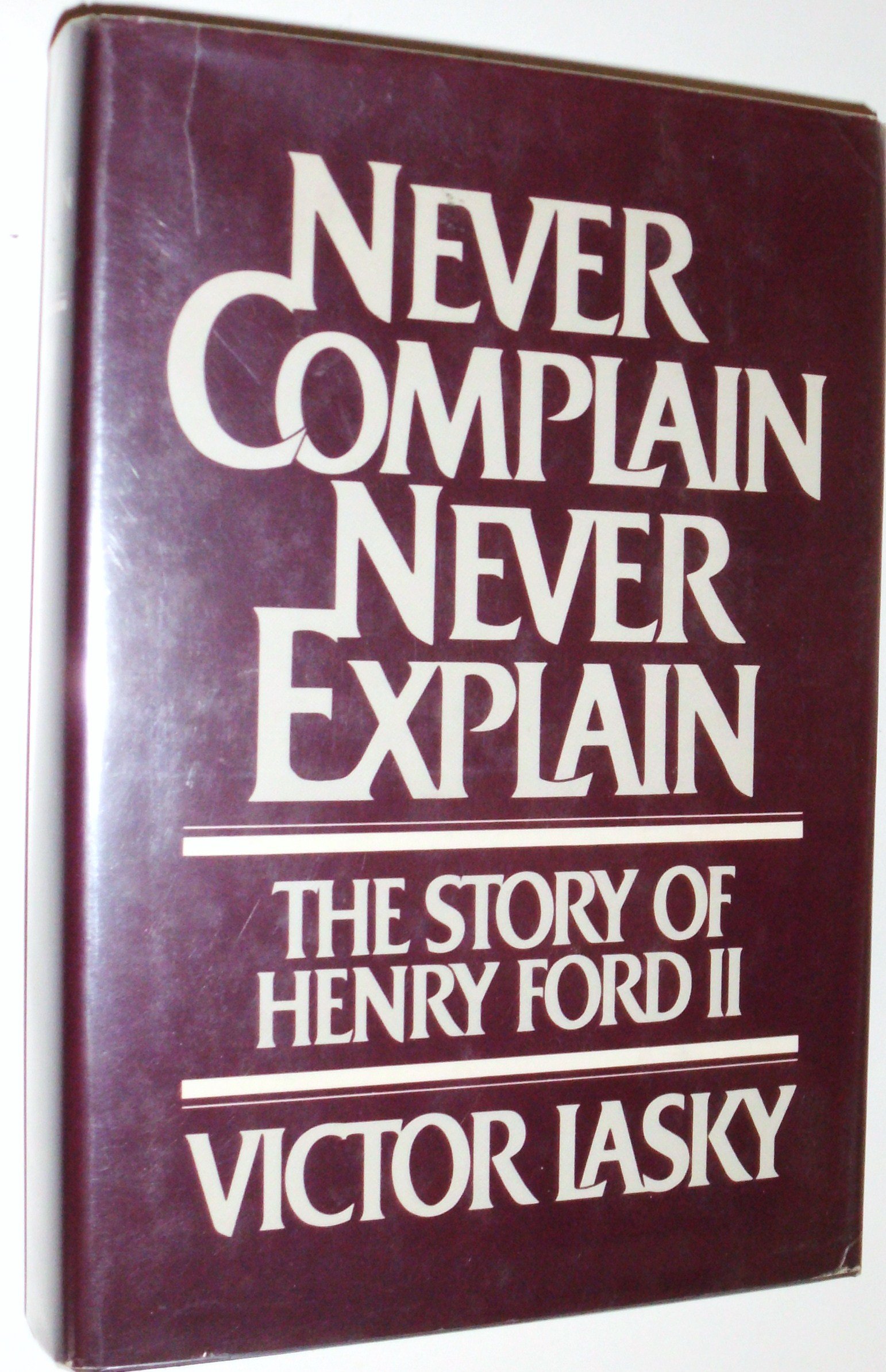
It’s a very Fordian sentiment. In fact I think that Henry Ford once said ‘Don’t Complain, Don’t Explain.’ (Or maybe it was his grandson.)It’s a very assembly-line sort of hyper-utilitarian thinking.
Its cousin is: ‘Actions speak louder than words.’
Well, to be sure, running off a cliff is a very loud action. But nonetheless, methinks you’d much prefer, even the briefest word of warning over your brave action.
A large chunk of what I do is explain things. It’s a significant part of how I intend to make my bread and butter. So, you can see why my jimmies have been rankled enough to produce an entire article, combating this utilitarian philistinism.
That is precisely what I’m doing by the way: combating. I am by no means being defensive. This is an offense. To war!
You see, you self absorbed, day to day, little worker bee drone constantly banging into my garden window with cries of: ‘Talk is cheap!’ No… you’re not as noble as my little honey farmers.
You’re the little aberration of the industrial revolution known as a Morlock, you’ve kidnapped my comically aryan Eloi wench, and I’m the Time Travelerabout to dash out your brains.
Why Can’t Americans Teach Their Children How To Think?
I’m as tired of trendy anti-Americanism as any other former Colbert fan. Yet still… Prematurely jaded, know it all, get to the chase utilitarianism is very much an American problem. To be more accurate it is an Anglo problem.
We Englishmen (And yes…Vinny, Morty, and Vlad you’re Englishmen too. Language is culture I’m afraid.) share a common history. We were the most successful children of the Industrial Revolution. It along with the limey penchant for sarcasm, snark, and preening are why sloth and self absorption are at such spectacular heights.
This is why even in the presence of nearly universal education, access to unprecedented amounts of food and shelter (for a spectacular number of folks), and more free time then ever we are still Eliza Doolittle.
GON!
I bet you don’t know what I’m referring to do you?
GON!
What is Pygmalion or it’s back to $7.25/hr, you harridan!
GON!
I bet you haven’t even seen the film, much less bothered with Shaw.
GON!
Back to the gutter with you wretched urchin!
To be honest, I’m not terribly bothered if you aren’t familiar with a very camp movie, about a very old play. It’s just that GON! Is the sound I hear when someone questions the value of thinking.
Imagine a cockney girl trying to say ‘Go On.’ I believe they’re called ‘chavs’ these days. Think of ‘GON!’ Resonating through little piggy, upturned, English noses. Imagine the vocal fry and shudder.
GON! Is the fizzy pop you get when you bottle provincial arrogance, hot air, and sloth. It’s stupid and proud of it!
“What’s up with water. Why should I care?”
GON!
“I don’t have time to read. I focus on the important things!”
GON!
“I’m an educated man.”
GON!
“Well the expert panel said…”
GON!
“Talk is cheap.”
GON!
“What’s the bottom-line?”
GON!
I really could go on, but in the interest of you hearing something more substantive then my colorful kvetching, I shan’t.
Do Complain, Do Explain
Sorry Henry, old chap, but I must be so decidedly contrarian as to turn your phrase on its head. In fact I’m considering making it the motto of The Fractal Journal. I do believe that America was founded on complaints against out of touch toffs. And I’m willing to bet, that you’d be very eager to have your lawyer, be able to explain, in exquisite detail, that the model-T patent is yours alone.
Absolutely everything requires an explanation. It may not always have to be verbal, but there will always be some sequence of information that an organism is aware of, and comprehends. Comprehending is really silent reading or explaining of a situation to yourself.
The Zen statement: ‘That is a rock,’ is only Zen and profound because the Zen practitioner has trained himself, to allow the universe to explain itself to him.
This is why I find it entirely bizarre, that people are almost proud of their sparse vocabularies, their short attention spans, and their disinterest.
Ennui is only sexy when experienced by young French women. If you aren’t a twenty something bombshell painting in Paris just stop it. You’re bloody annoying.
Why be proud of handicapping your capacity to be human? It is the greatest gift of mankind to be able to perceive, explore, and take joy in knowing.
Why do we instruct writers to dumb things down for readers? Rather than instruct readers to aspire to possess a more nimble mind and vocabulary?
Explaining and comprehending takes time… and we have to go before the mall closes!
Pity.
Explanations are so very intrinsic to being. They are such interesting things. What is a song or symphony but an explanation of the unspeakable?
I think it may be easier to convince you that explanations are worthy things. It may be harder-going promoting the merits of complaints. No one likes a complainer.
Actually, it’s quite easy. Disdain for those who complain is silly. Complaints are simply the explanation for why something is wrong. When you are criticizing someone, merely on the grounds that they are complaining, you are complaining about complaining. How deliciously self defeating.
“SO WHAT IN THE SOLEMN HELL DOES ANY OF THIS HAVE TO DO WITH JOURNALISM?”
I can just hear the Engineers and MBA’s seething. Yes, see he has no utility! There’s no bottom line. This article doesn’t do anything. It’s just pretty fluff.
Well, my hypothetical pedants, for all your mechanical brilliance, and shrewd sensibilities you’ve failed to grasp that this entire article is a machine with shrewd purpose, built stringently to spec.
In the span of a mere five pages, ‘I’ve been a traveler of both time and space,’ exposing the liabilities and structural defects, that have led to the decay and disdain of journalism, through the power of the mighty literary device. (Several literary devices TBH. But ‘mighty literary devices’ sounds daft.)
Journalism has value. This is because journalism, when done properly, is simply an interesting way to tell the truth. Telling the truth in an interesting way has intrinsic value. It has intrinsic value because the truth not only sets us free but allows us to: invent, to build accurate models, and cultivate effective strategies and behaviors for surviving, and getting the hell along.
That’s precisely what I’ve done here. I’ve covered a current trend in public sentiment and explained why it’s destructive. I’ve done so in a way that is much more entertaining than if I had merely created a bullet point list, with links to various studies, on the correlation between IQ and vocabulary, and journalism’s role in keeping businesses and governments accountable.
“Ah!” Cry the number crunchers, “But that is where you’re wrong. We’d be much more interested in seeing those!”
Sure, it showed a correlation of verbal intelligence and IQ but verbal intelligence is still intelligence. You need to understand things to be intelligent.
This last link is a detailed analysis of the various effects and complications of journalism and media on society and perception.
Happy?
Liars. You don’t want to read that. Especially the highly sciency pubmed study. Because it’s boring. And not only that but it disagrees with your Weltanschauung. The only thing people hate more than being bored, is being bored as it slowly dawns on them, that their beloved ‘science’ (Science is great. ‘science’ isn’t.)is against them.
Total vocabulary has the highest correlation (0.8) with overall IQ of any individual measure of intelligence.
Stings don’t it? Knowing that word wise people are just as intelligent as number savvy ‘hard nosed realists.’ It’s almost like reality has a qualitative as well as quantitative aspect. Whodda thunk it?
Finding important topics, getting an accurate grasp on them, and then presenting them in an interesting light is an art and science, that I am delighted to participate in and champion.
I here consider all Morlocks slain and the merits of journalism thoroughly upheld. Offensively!
Financial Journalist Mark Melin gives examples of journalism’s positive impacts on the Keiser Report: the relevant discussion starts at minute 22.
The ‘ring of truth’ is still just an after effect…
Or
The case for print and excessive subtitles!
The news often ruins my digestion. Not because it is bad news mind you. I’ve made peace with the fact that the world isn’t peaceful long ago.
No, the news ruins my digestion because it’s artificial. To be more precise, it ruins my digestion, because recently it has become crassly artificial. It’s a bacchanal of Tupperware and plastic confetti.
The news is artificial by nature so artificiality in and of itself isn’t the source of my dependence on Pepto Bismol. Yes, the news is artificial, But that does not mean it has to revel in it. Unwholesomeness of this sort will ruin anyone’s digestion.
So how is the news artificial exactly?
It’s artificial because it is by its very nature a representation. Most representations today are far from representative of the truth. The ones that hit really close to home still miss the exact mark because they are facsimiles. See: Xerox loses fidelity with each copy, the whisper game, etc.
This inescapable fact of the nature of news means that you have some serious digesting to do.
It means my friends that you are going to have to READ the news and not just hear or see the news.
While both audio and video recordings have their merits, and can be revisited as often as one likes, there is still much to be said for the static black and white of print.
First its immersiveness, and its cognitive effects promote deeper learning; that is less encumbered by the visual tricks of a news mink’s legs, or the tonal ploys of a beseeching moral crusader.
While lots of devilry is possible through turns of phrase, white lies, and outright chicanery these things are less pernicious in print. They are less pernicious because they are easier to spot and there is less of a blend between the real and virtual world.
The virtual world of a corporate news room, or talk radio broadcast is really good at getting in your head, because it is your heads native environment rendered electrically. When someone says something convincingly, or a sexy charming sort claims to be objective, you may know better but these messages will permeate deeper. They will permeate deeper without being properly digested.
The reason that I favor and profess the merits of print is because it gives you a broader space for assessment. The rapid fire bombardment of multi-sensory information that happens with audio and visual news services doesn’t give you adequate time to digest. Which means that there is a greater likelihood that you will come away having assimilated more views without assessment than you may have realized.
Print just stays there staring you in the face. It is because of this stasis that you can get a better feeling for the fact that ‘things can be found out.’ Things can be traced back.
Reading you see promotes further reading. Therefore it promotes research. Because when something you either fancy ,or despise is sitting there, staring at you in all its static glory: you want to know why it’s correct or detestably false.
And you know that you can do it, because you know that very likely there is somewhere supporting statements, that are also black and white. Thus you participate in a culture of deeper searching and thinking.
When I listen to news banter, or hear of the latest from this or that event, my impulse is more often to chat with friends or blast out an opinion column. However when I read I think deeper and reach for more sources.
I think the case for reading is actually stronger today with the advent of the internet. Because with the internet you can dig through much more things almost instantaneously.
The world, especially today is incredibly complex, and monumentally nuanced. We must visit and revisit issues ad infinitum because there is always something new to be gleaned in the old.Such is honesty, such is philosophy, such is science. We now have more tools than ever to do this well on a grand scale. Therefore we have a duty.
Yes, because of all that I’ve mentioned and the nature of technology: I have to say that reading news is a duty. That thinking about news is a duty. That rereading news is a duty. That perhaps even columnisting, blogging, book writing of your own is a duty.
It is a duty just like making sure that your gut is healthy is a duty.




 The Fractal Journal
/Josephine/shot0072.jpg)
