Just some updates about a new posting schedule for The Sketch of Sam Monroe (a novel in progress you can find on my website). Also, I go into a bit of a super informal ramble about one of the themes in that story: ancient civilizations.
A catchup vlog where I review topics like policing, surveillance, technology, chat a bit about the storm affecting (effecting? lol always hated this) the southeast and give some updates on upcoming content.
I don’t know if I’ll release these weekly but the past few days have been busy so I want to make sure that I at least put forth the effort to post. I believe in quality over quantity but I also believe that you can’t really develop quality without quantity. Tomorrow will definitely see a new section of The Sketch of Sam Monroe since I haven’t missed a T day (Tuesday or Thursday) in at least half a year.
Potential Vlog Topics
– Amazon in general, and Amazon’s Bans of Roosh V’s Books
– Further analysis of Berners-Lee’s projects and internet freedom in general
– Further analysis of policing in the United States and Axon’s SaaS service (Axon is formerly taser)
– Social commentary on guru culture, get rich quick schemes, vague notions like ‘success’, education, and the weird weird world of modern ‘romance’
Potential Essays
– Global Warming/Climate Change and the issues this spotlight hoggin diva obscures
– Indie Writers Workflow
– More on the importance of sleep
Other Stuff
Getting back into Post Grunge Punks Webcomic
Further Developing the Artie Steam Punk Webcomic
More original music or classics recitals
I know it’s lame to post plans instead of actual content but I’m super pressed for time this week. I might try to this at the start of every week to give everyone an idea of things they might wanna stay tuned for. It’s a good way to light a fire under my own ass. Or maybe just a bunch of false promises. Time will tell.
I appreciate each and every subscriber. Thanks for reading and commenting.
https://www.minds.com/Weirmellow | Indie Social Media Site https://www.patreon.com/TheFractalJournal | Support the Journal – I will always try to improve production wise independent of revenue generated through this content but every bit of loose change helps. Whether or not you choose to help out I appreciate your visit.
The lack of content today is due to geekery but I guess I can turn that into content…so!
Just installed Linux Mint 19 ‘Tara’ on my old 2014 HP Pavilion Slimline system. Works swimmingly thus far, sleeker design, and the snapshot feature is nice.
Going to be putting out some Essays, another Sketch of Sam Monroe (tomorrow), and definitely doing some vlogging about environmental issues and such.
I stall for time! In the coming days, I will post a fairly in-depth analysis of internet issues and the recent Vanity Fair Article about Tim Berners-Lee and his new project called ‘SOLID.’
For now, I just give a brief overview of the problem domain and my first impressions of the article.
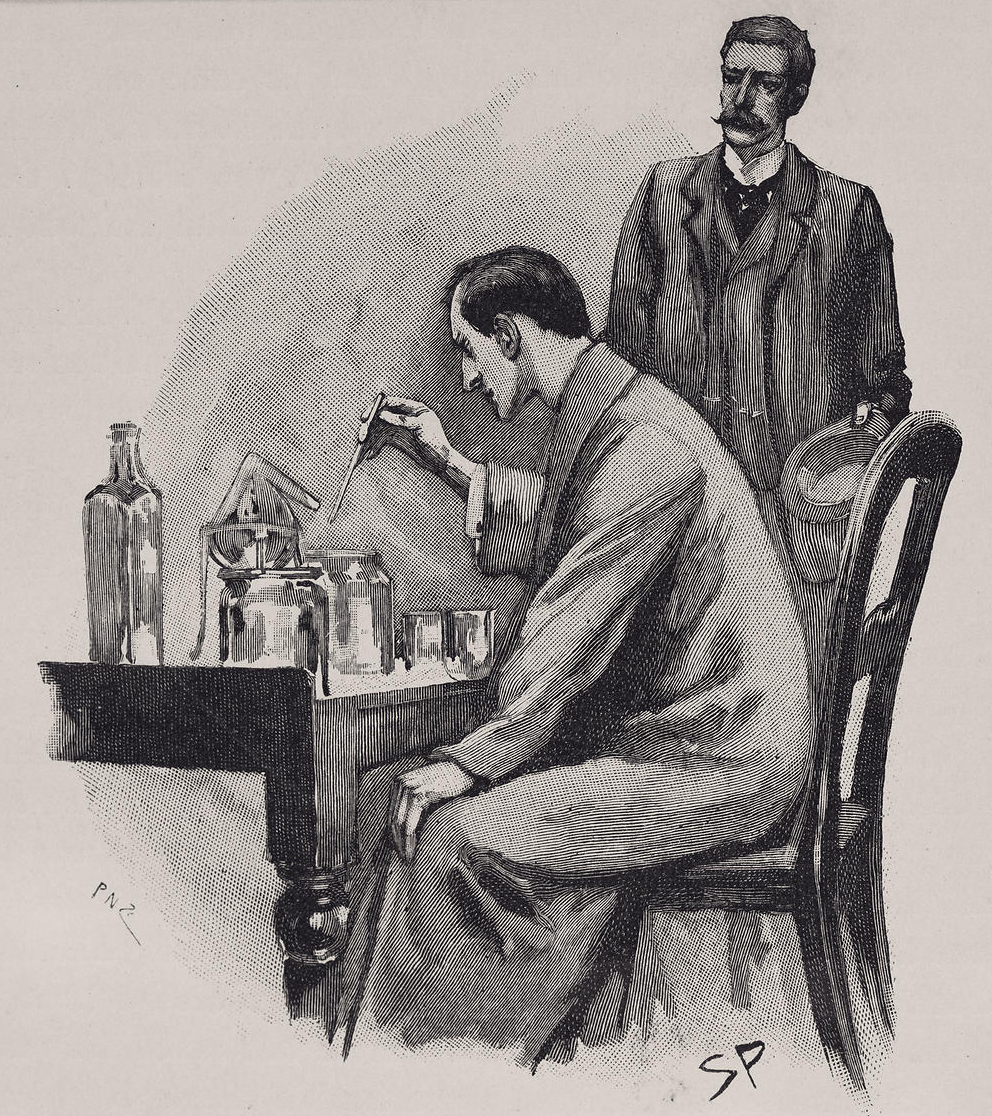
Really couldn’t settle on a relevant picture. Holme’s was an analyst extraordinaire.. and there’s some sort of thing on the public channels about Queen Victoria. So good enough.
Apologies for issues with the formatting, I ran out of time, and hope to be able to fix the eyesore within the coming week.
The term integrative analysis is generally used in an ‘applied science’ context. ‘Big Data Companies’ such as IGI Global define it as:
1. Analysis of heterogeneous types of data from inter-platform technologies.
Inter-platform technologies mean that the machines and instruments used to gather data are combined into a cross-platform system for integrative analysis of diverse data-sets; which often results in an emergent framework.
That’s still a bit clunky. A better take may read something like: using data from different measurements and processes and combining it to find new patterns that lead to new hypotheses, and discoveries, in so doing paving the way for yet more hypothesis and discoveries.
So in essence just plain old science. But there is a distinction. In that, this is plain-old science at an incredible pace. Augmented in the case of IGI and similar ventures by computing and highlighting the need for the synthesis of such technology assisted derivations in iterating novel solutions.
I am taking pains to describe the more prevalent (industrial, professional, sic) use of integrative analysis to avoid confusion about its operational definition as regards this journal.
At the core of this sophisticated-sounding term is a simple concept. In essence integrative analysis is about not missing the forest for the trees. And actually, it goes a step further than that in not missing the trees for the forest.
That’s what I love about ‘Integrative Analysis’ – It is a top-down, bottom-up, object-oriented sort of thing. Not tarrying too long within the restrictive parameters of any one iterative methodology.
Why apply such a term to a somewhat artsy, ‘philosophical’ website like The Fractal Journal?
In short: spillover. What I mean by this is that the incredibly successful scientific practice of reductionism has bled into other disciplines, like journalism, the arts, and philosophy.
I am by no means ‘anti-reductionist.’ I view ‘reductionism’ as an indispensable weapon in the arsenal that will help humanity win the war for understanding. It yields results because it’s intuitive, focused, searchlight helps us break down processes and problems into workable parts.
Reductionism has always gone hand in hand with bottom-up methodologies. In which the parts, once understood as distinct, are reassembled into an integrated whole. So why proclaim any level of novelty or lavish special attention to ‘integrative analysis.’
Well, simply because two things go hand in hand, doesn’t mean that their relationship is always balanced. I don’t know if it has to do with the psychology of folks given to the hard sciences, or is simply due to the intrinsics of the hard sciences, or some combination of these factors but the balance has certainly seemed to be in favor of reduction (At times even ‘reductio ad absurdum’).
Really, I think that this has something to do with the greater need for specialization as the complexity and depth of respective fields emerges.
Or, more specifically: The focus of respective disciplines despite sharing a common core of basic scientific principles has titrated down to rather over-isolated little monads. This being the result of over-reliance on reductionism, perhaps by necessity.
There have been folks more qualified than I who’ve commented on such trends, like the biologist E.O. Wilson, who calls for the need for a return to more classic conceptions, with a focus on synthesis over isolation. (That is my takeaway from his book Consilience and should not be read as a definitive statement of Wilson’s position.)
This trend of over-reliance on reductionism has led to the unnecessary and destructive Balkanization of disciplines. While there is a need for distinction, there is no need for rigid walls. In fact, such walls render the world of science and the humanities more sterile than they need be.
Synthesis, integration, of data and ‘models’ derived from reductionist processes, is what The Fractal Journal is about. The emergent frameworks like the ‘fractal analogy’ of its namesake are why I think it valid to use ‘integrative analysis’ as a subheading.
Despite the journal’s broad range of topics, and its use of artsy and informal means of framing information and exploring subjects, it does engage in ‘integrative analysis.’
Though it isn’t a highly specific computer-assisted search for ‘proof of concept’ it does nonetheless venture into serious, structured analysis of parts and systems. Since it does so with an especial focus on highlighting the overlap of parts and systems it can fairly be called integrative.
I’ve often found this need for integration elegantly highlighted. Just today while doing background reading for the first chapter of my water book, I jumped from covalent bonds to valence, to heuristics, and finally to the Inventor’s Paradox. All these things were interconnected via Wikipedia because they are interconnected conceptually. This is the first proof of the integrated nature of reality that I witnessed just a few hours ago.
The second proof is the ‘Inventor’s Paradox’ itself. The inventor’s paradox lies in the domain of problem-solving. It addresses the very heart of the problem with over-reliance on reductionism; by pointing out the somewhat counter-intuitive fact that sometimes broadening your search, helps you find a specific solution.
The paradox was introduced by George Polya in his book How to Solve It:
– The more ambitious plan may have more chances of success […] provided it is not based on a mere pretension but on some vision of the things beyond those immediately present.
When you are attempting to solve a problem in the reductionist style, which really is the natural, and intuitive style, you use Occam’s Razor to remove as much ‘excessive variability’ as possible.
I know that some people consider it gauche to quote Wikipedia directly, but I really found the way reduction’s problem was painted there rather elegant:
“Doing this can create unforseen and intrinsically awkward parameters.”
I really like that phrase ‘intrinsically awkward parameters’ because it’s a really apt way of portraying the limitations of reductionist methodologies. Too narrow a focus, too specific an explanation, leaves you more vulnerable to stagnation via the illusion of having arrived at either an answer or an impasse. It is the ultimate missing of the forest for the trees.
It always reminds me of a wonderful evening I had about half a decade or so ago. My ladyfriend, my best friend, and I were all hanging about a house she’d been allowed the use of. Lounging about, washing away the taste of cheap cigarettes with cheaper wine we were a perfect portrait of decadent Bohemians. She fancied herself a visual artist, or at least that was what she’d intended her university to teach her, till it convinced her to lean towards marketing. So, she had many a drawing supply at hand.
My buddy and I who were more musically and mathematically inclined decided on a whim to abandon our bantering about on a couple of guitars to join her in drawing. This is where the psychological and methodological differences relevant to this essay came into play.
I am a sketcher. I draw broad and messy things and eventually whittle them down to finer details. My buddy who’d I’d never seen draw before was a solid line, boom, there’s the thing, no bs, sort of fellow. I think he’d drawn a parrot or a penguin or some such thing with very clearly and neatly defined lines and structures. It was like an ‘engineer’s blueprint’ of a caricature of a penguin. I think this unsurprising given his facility with programming and mathematics.
I believe that on this night we had a nautical theme going. Perhaps owing to the presence of Rum somewhere on the premises. Hence the parrot or penguin or what have you.This ambiance led my storyteller’s mind to form all sorts of imagery from bits and pieces of literature I’d read over the years. I’d drawn something akin to a villa on the coast, luxuriating, on a clifftop above a bay lined with ships. Aesthetically it was somewhat lacking but intelligible enough. It did not have the neatness and the crips pleasant feel of my friend’s parrot. But it did have something else: context.
Context to me is the aim of integrative analysis. Rather than a very clear, and pretty, solitary parrot, of an engineer; a contextualized version would have that parrot atop the shoulder of a rum-swigging pirate, standing in the crows nest, amidst a placid sea. Something that an architect may be more likely to produce.
Really, this could be taken even farther.
Terrence McKenna said in one of his many lectures that people tend to be either seers or readers. I think this has some validity demonstrated through the story above.
I consider myself to be a reader. Seeing things and extrapolating a meaning, a context, which I then display. A seer sees a monad, a thing in isolation, but in exquisite detail, its background might be hazy, but the thing in itself is there, complete, coherent, etc.
I think it important to merge these two inclinations as much as possible. I think this important because the world is not bottom up, or top down, or even object-oriented. It’s up and down, and bottom up, and goes every which way.
….but in every which way within reason. It is the search for that reason that humanity has embarked upon and which The Fractal Journal is glad to support and celebrate.



 The Fractal Journal